Living in a Guardian Property is not a noble act. Property guardians are tools. Their primary purpose is to maintain the value of an empty property and the land it stands on by protecting it from squatters. In doing this they help facilitate a wider process which seeks to change the social makeup of an area so as to increase the rents that can be drawn from it. And all the while, they have barely any rights: neither exclusive possession of the property nor a specific period of tenure and no identifiable landlord. For fear of falling to the bottom of the long waiting list, prospective guardians are forced to take on properties that are often dilapidated and at times downright dangerous. And while the rules are enforced with little consistency, the contracts drawn up by the guardian property companies demonstrate an almost tyrannical attention to detail.
It’s a situation that has been a long time in the making. Deregulation and fragmentation of the UK housing market began in the 1970s and has gathered pace ever since. As a hyper-precarious form of tenant the guardian could be said to be a direct culmination of this process. Their existence would not have been possible were it not for a slew of housing legislation that has progressively eroded the rights of private tenants, removed social housing from public oversight, deregulated housing finance and generally transformed domestic properties from homes into a means of accumulating and storing wealth. Since a house is now increasingly seen as a commodity then its protection from squatters is vital. Profiting from that protection is naturally an added bonus. And the diminished rights seem perfectly normal given most of us are already encountering an ever more precarious housing regime in any case.
Every article I’ve read on the subject concedes some downsides. But none highlight perhaps the most serious concern: that in London (and elsewhere) the property guardian is being used to protect former social housing while councils seek to decant the previous tenants (on the grounds that the homes don’t meet the Decent Homes Standard) and open up the highly valuable land to private development. And while much is made of the guardian’s free rein over an empty property, no article explains that this freedom comes from their brief usefulness to this process of “state-led gentrification”. Yet it is in the tension between these two aspects of the phenomenon that something really interesting is happening. Due to often deliberate under-maintenance these social houses have become seriously dilapidated. Many are relatively ordinary buildings. What makes them extraordinary is the property guardian’s proclivity for rejuvenation using highly personalised makeshift solutions.
Shooters Hill Road, Blackheath
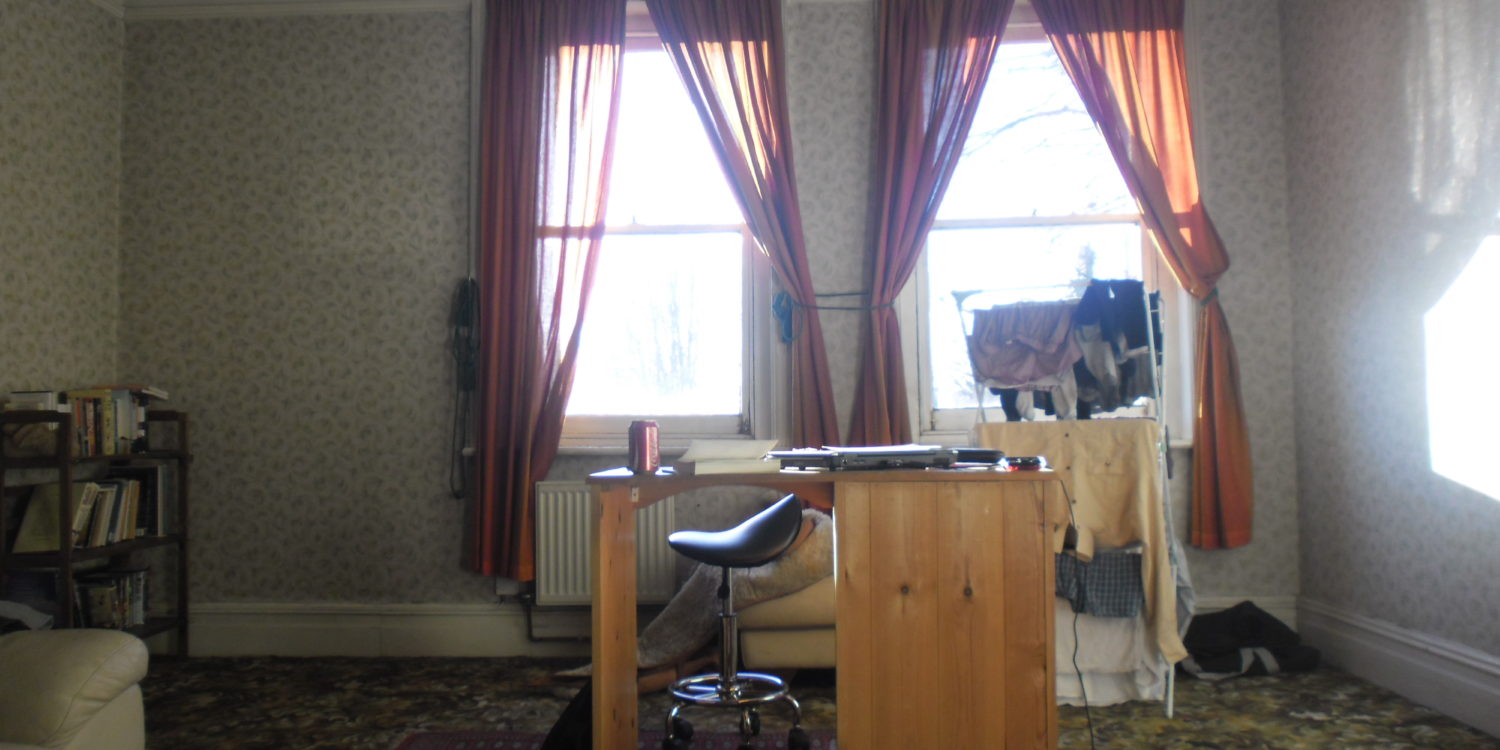
I should start by admitting that I myself lived in a guardian property for two years, a crumbling Victorian coach house on Shooters Hill Road owned by Greenwich Council and formerly inhabited by council tenants. Throughout our time living there my housemates and I expressed ambivalence about our role in relation to the property. On the one hand, we were there because the dilapidation that had forced the former tenants to leave wasn’t a barrier to us. On the other hand, none of us could have moved to or remained in London as easily without the opportunity it offered. We were tools of exploitation being exploited ourselves through our diminished rights. And while our contract afforded us limited opportunities to change the property this didn’t stop it providing a blank slate to put our stamp on the place.
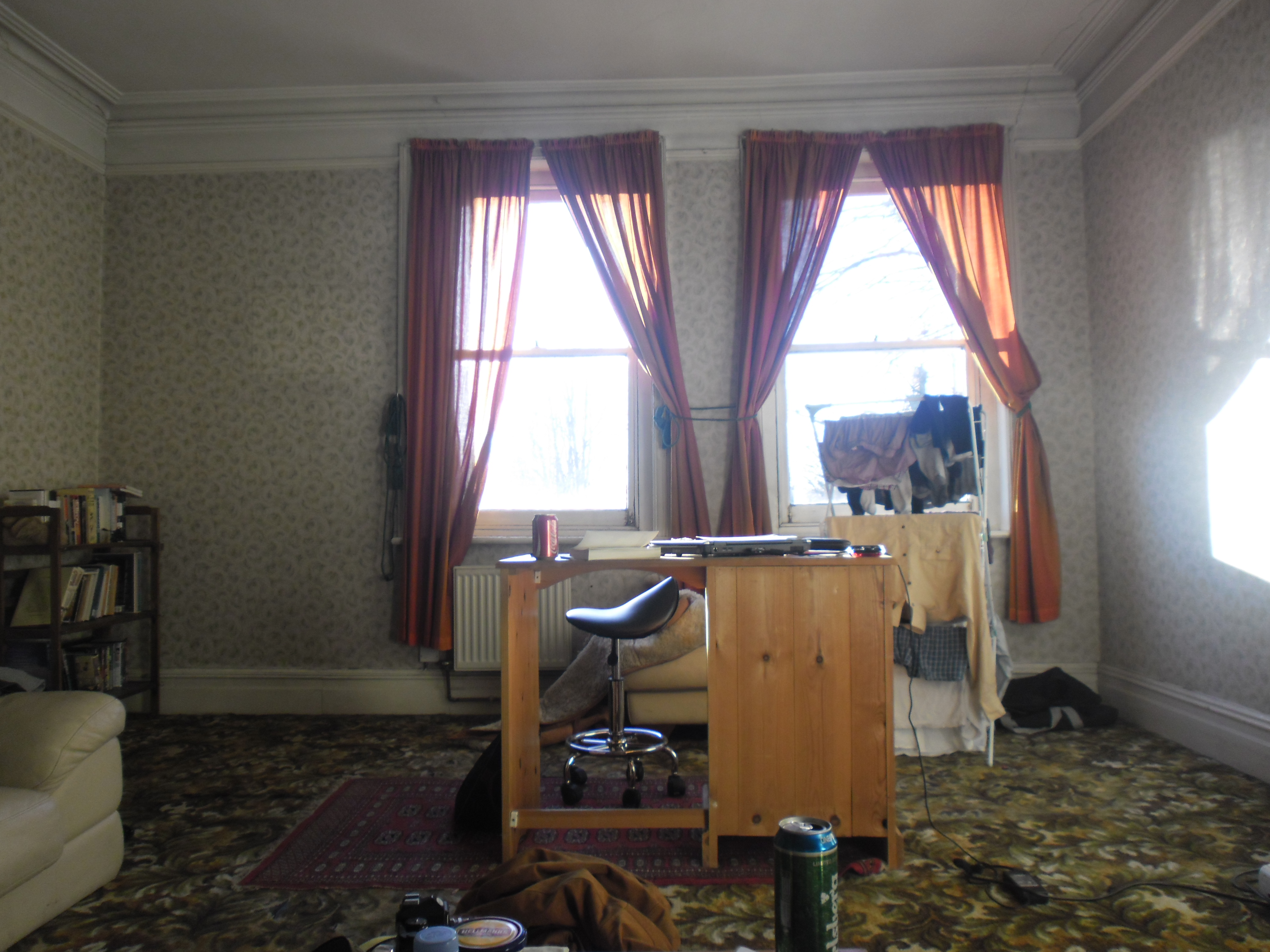
Shooters Hill Road
It’s shabby. There’s no question of that. But we slowly added a hodgepodge of furnishings that followed a rough aesthetic. In an undeniably facile gesture, we eschewed the interior design associated with the flashy young professional. In the words of another housemate “there was something quite juvenile about our existence… part of the attraction of being in the place was this boyish wistfulness.”
Even so, this gesture could not have been so pronounced in a typical dwelling. However juvenile, it offers an example of how an empty property allows for a more personalised interior. Yet this is a trifle compared to the work of other guardians I’ve spoken with.
Del
For four years now Del has been living as a property guardian in a variety of buildings in London. Last summer we sat out in the large, slightly overgrown communal garden of the property he’s currently living in.
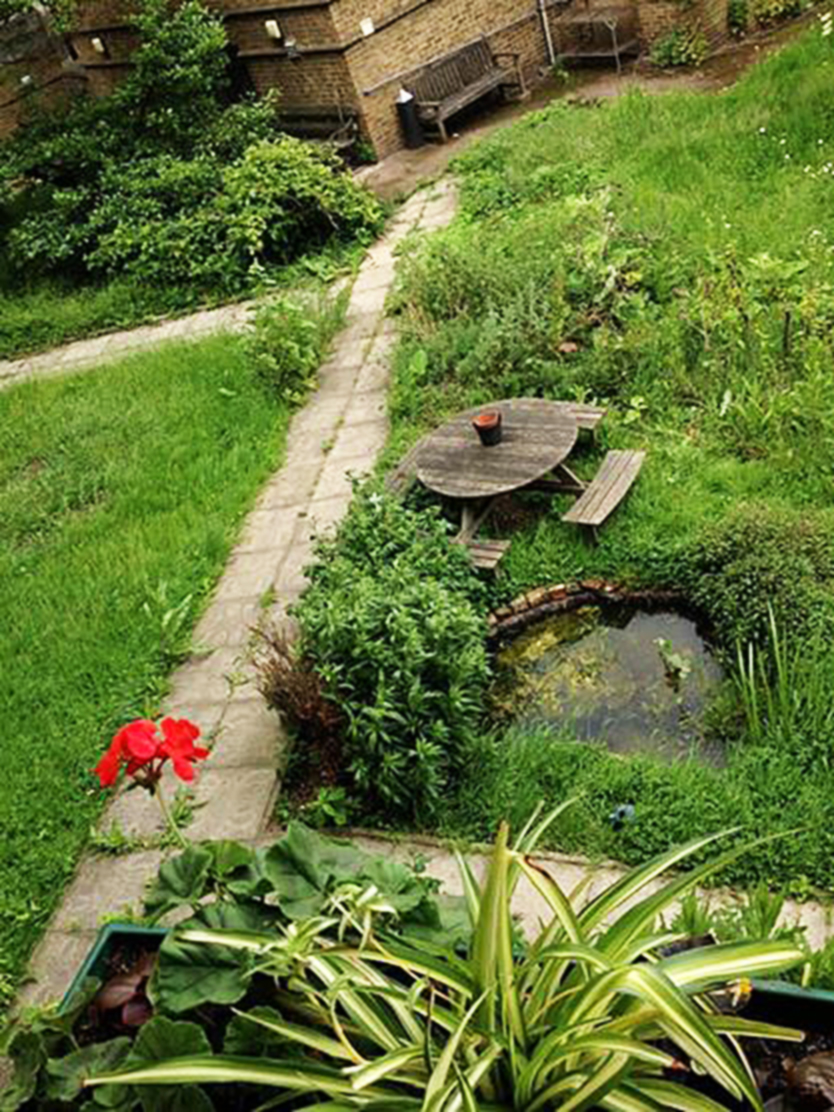
Archway Garden
We talked about life and the unexpected shocks that can unsettle even the most determinedly settled people. By his forties he’d established himself in a smart five-bedroom house beside a lake. Things changed and when I met him he was living in a single room (mind you, very comfortable and very spacious) in a former teaching hospital in Archway (and only a pond to speak of).
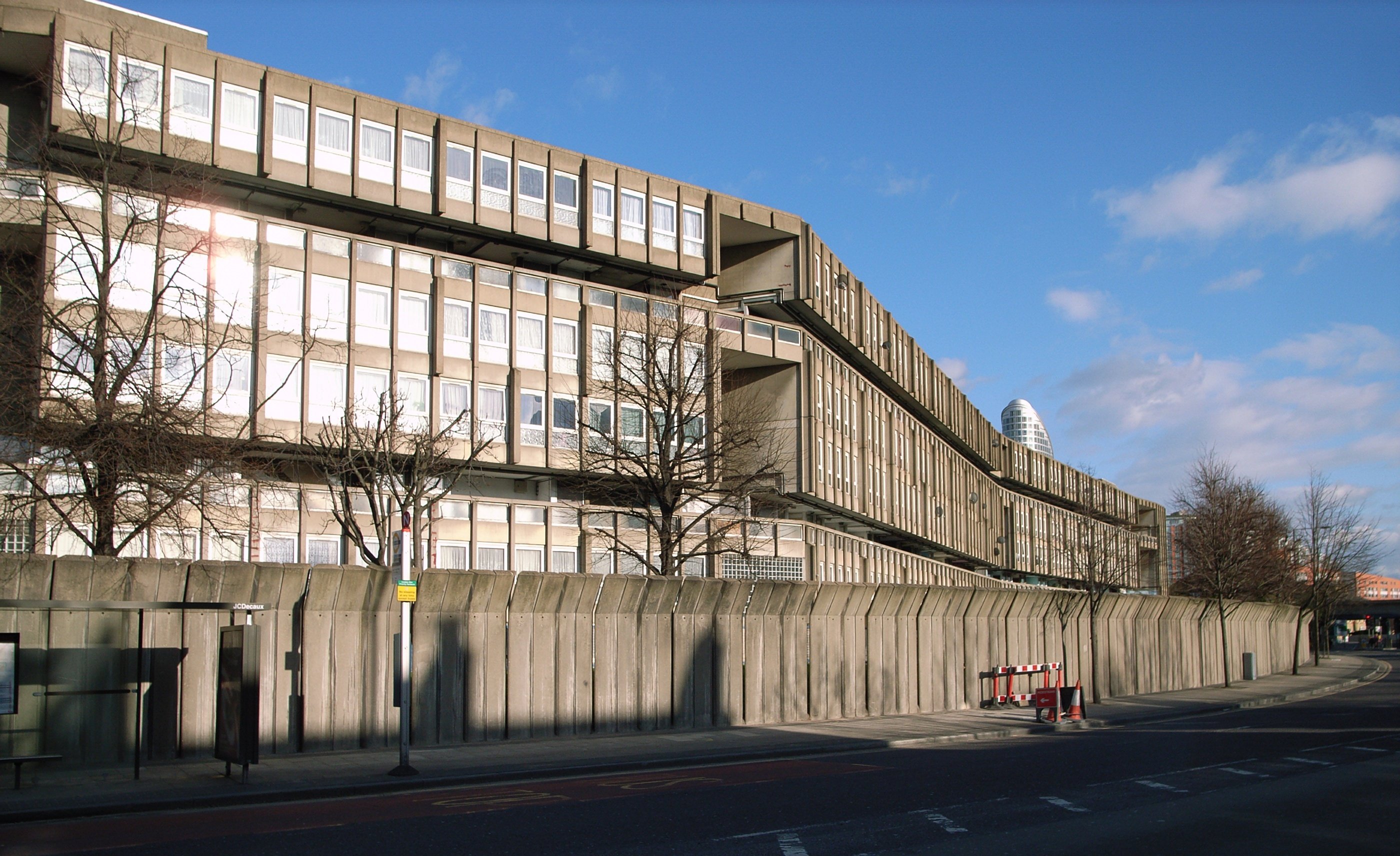
Robin Hood Gardens
Wikimedia
Upon embarking on his life as a guardian, the first property Del was offered was in Robin Hood Gardens in Tower Hamlets. In keeping with councils’ disregard for maintenance, it was filthy and completely uninhabitable. He refused it and held out for an only slightly more promising flat in nearby Anderson House. He reflected that his aim upon moving into the flat was to negate the dirtiness: “dark and dirty became clean and white”. He took two weeks off work, slept on the sofa and “just got up and rolled my sleeves up, painted all day, took my overalls off, slept and then got up again… And then it was clean and white and it was this… lovely… space.” Del knew that Anderson House was due to be demolished but was content with this, saying: “that’s part of the price that you pay… In my mind generally I couldn’t sleep for one night without knowing I was going to clean the place up.”
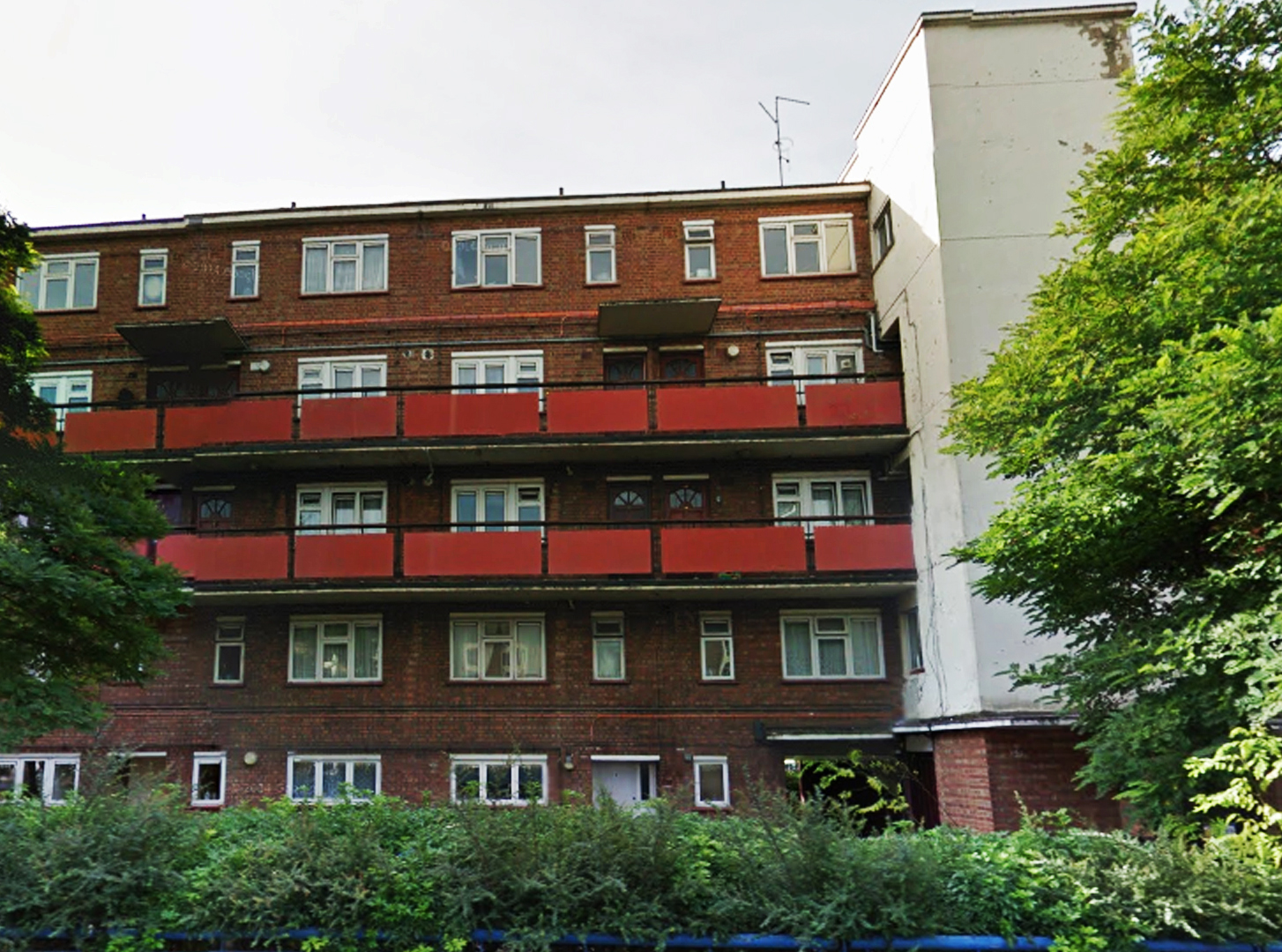
Anderson House
From the beginning, the unusual circumstances prompted Del to think carefully about how he could make-do and minimise expense. Consequently, as he moved from place to place, he became embedded in a second-hand furniture economy. In addition to assisting other guardians by offering his 4×4 to help collect furniture, he has also acquired and given away furniture in equal measure. Initially he kept surplus furniture in storage, but he now has it distributed amongst his friends and fellow guardians. His diminished concern for his possessions was self-evident. In his own words, “…if someone screws up one of those sofas, I’m beyond worrying about sofas. I haven’t lost my grip altogether. In terms of what’s important, it’s not possessions.”
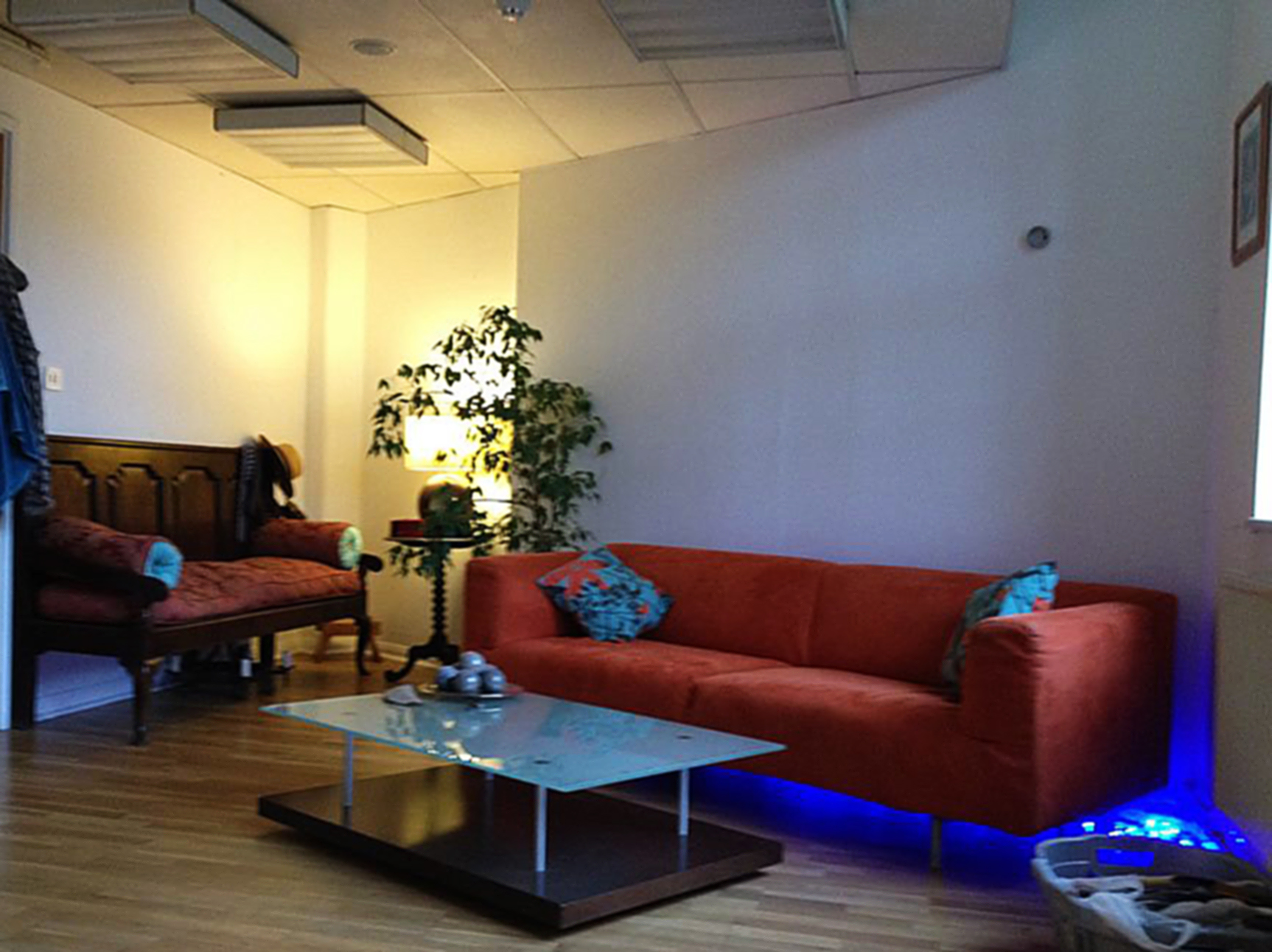
Del’s Room in Archway
While we talked I can remember the issue becoming less clear in my mind. In the midst of a wilful neglect and corruption of London’s social housing stock, there was something pretty special about what Del’s activity had done for him and what it had done to the properties he’s lived in. To feel a part of a community of people seeking to maximise home comfort at minimal cost makes for an incredibly fertile environment for sharing and re-using things creatively. And to have licence to reshape a property and yet to be unsure for how long the efforts can be enjoyed makes for an intriguing opportunity to produce an idiosyncratic and sustainable design vernacular. Something well represented by another person I spoke with.
Terry
Practically all Terry’s furniture is second-hand: from the street, from sites like Freecycle and from friends. The rest he’s made himself. Like Del, he said this is in large part because his living situation encourages a desire to salvage and to think carefully about his possessions. In furnishing his flat Terry described his main concerns as: “Does it fold up compact? Is it easy to move?” Because “at any moment,” he said, “I get two weeks’ notice.”
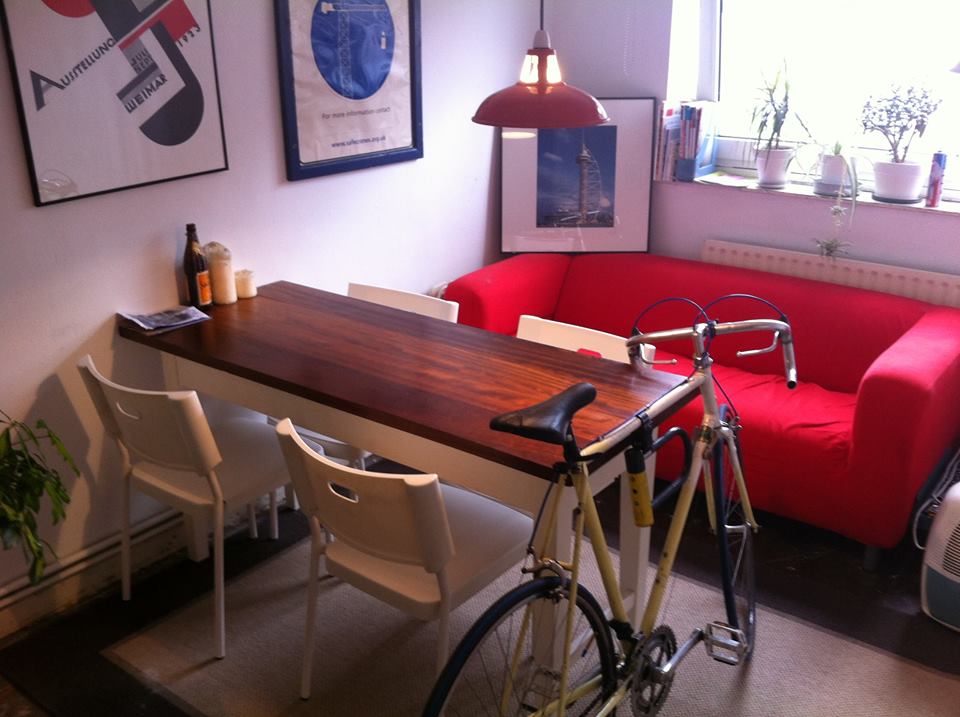
Terry’s living room.
When I spoke to him Terry lived in the place pictured. Before he arrived it was derelict. The council had moved out the previous tenants and placed sitex screens on all the windows, leaving it empty for several years. In his words, inside was black mould and grease and grime everywhere.
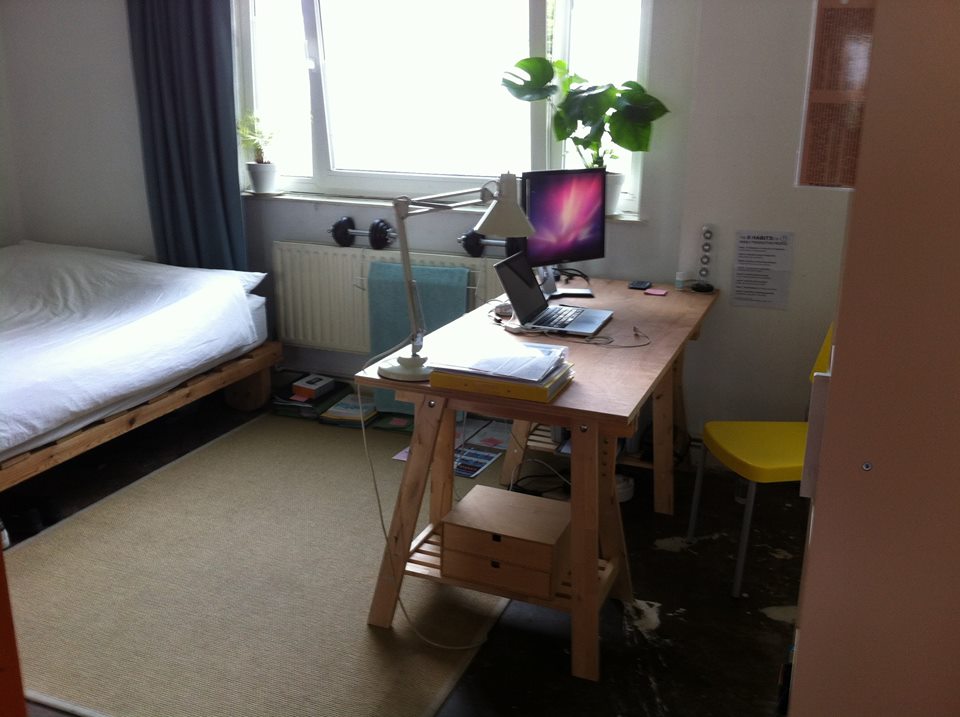
Terry’s bedroom.
In spite of such constraints Terry has clearly been able to impose a distinctive aesthetic. He is very selective over what furniture goes into his places. It has to have a particular form and look, very modernist. “The places I live in, they’ve got my stamp on them. I have a specific arrangement of my space… and you can tell that.” After he moved from one property to another a friend commented on the new surroundings that “It’s like your old place, you’ve just unpacked it”. Facing demolition, these former social houses afford Terry an incredible freedom to create a home to mirror his nomadic personality.
Useful-doing
Something that stands out about how both Del and Terry have decorated their guardian properties is that their activities are free of any concern for resale value. I’d argue that this is the precise opposite of another phenomenon prevalent in the capital: the overused Georgian townhouse template which tends to turn houses into commodities rather than, as they ought to be, expressions of their inhabitants.
The Marxist sociologist John Holloway describes this kind of activity as “useful-doing”. To overcome the dehumanising features of our market-dominated society, Holloway argues that we should as much as possible try to do things because they are useful in themselves. The difference between the homes of Terry and Del and the mock-Georgian townhouses produced entirely for their appeal to an impersonal market underlines the appropriateness of this perspective. Most people would like to have total freedom to decorate the place they live in. Indeed this is a major reason why so many people aim to be owner-occupiers. But even owner-occupiers are inclined to decorate their home with one eye on its potential resale value. The temporary free rein of the property guardian goes beyond this.
As such, I’ve spoken to a guardian who used an entire floor to operate a bicycle repair business, one who built a studio for his band, another who painted the entire property in primary colours, and someone else who plastered the London A-Z all over their bathroom walls. There are countless anecdotes of this sort. But these are extremes. The more basic effect is that these people have been given often dilapidated dwellings and given the freedom (though not the resources) to bring them back to life. It is an unusual phenomenon where those typically forced to rent in London are afforded the chance to shape their home more after their own heart’s desire, and not only that, they are invited to do so in dilapidated former public buildings.
Conclusion: A Simple Difference
It’s easy to get carried away and forget that these openings are incredibly momentary. They also fly in the face of the fundamental truth that such experiments are taking place at the expense of the former inhabitants. I don’t mean to whitewash this reality. Rather I mean highlight what could be done if only the market didn’t have such a hold over things.
The difference between the guardian and the social tenant is simple. As useful tools of development, guardians are briefly given a degree of freedom. In this fleeting window of opportunity they behave as anyone would in the circumstances, doing things to their house because they are pleasurable without concern for whether their efforts are marketable. As barriers to development the previous social tenants were never going to be so fortunate.
A little more free time, financial support and a more permissive attitude by those managing the housing would most probably have allowed the previous social tenants to fix up their houses cheaply and yet according to their own tastes. Moreover, it might have curtailed the propensity to decant on the grounds that the homes are uninhabitable.
In this context, the property guardian is like a spectre haunting the spaces they inhabit, acting out the unrealised lives of social tenants freed from the shackles of a market that could never countenance the presence of truly free housing.
All names in the article have been changed