This article is part of the FA special series Everywhere Walls, Borders, Prisons.
Inside Gjadër, a small village in northwestern Albania, the streets lie empty under the scorching July sun. Once a site of strategic importance during the communist era, the village hosted the region’s most significant military base. Back at the time, the air buzzed with the sound of landing aircraft, which were sheltered in extensive underground hangars connected by a network of tunnels. After the fall of communism, the base became defunct and the village gradually emptied due to mass emigration. Today, only a handful of families remain, many still clinging to memories of what life was once like in Gjadër. In one of the only three bars lining the village’s main road, we encountered Jetmir*, a young Albanian man recently deported from France. “They returned me to Albania ten days ago,” he tells us while sipping his beer. Like many other men in the small village, Jetmir left Albania in search of a better life. But his dream was cut short when the French police caught him undocumented.
Just a few kilometres away from where Jetmir sits, on the grounds of the former military base, a refugee camp stands tall, nestled between the Kakariqi mountain on one side and the Drini River on the other. Heavily patrolled by Italian police, the camp is fenced off by five-metre-high walls forming an enclave that is opaque, inaccessible, and disconnected from its surroundings. Behind these perimeter walls, there are men with dreams similar to Jetmir’s: to build a decent life elsewhere, to escape poverty, or to flee war. Yet, the architecture of fear, constructed in the name of ‘public security,’ is the first to imprison these men, preceding their deportation in handcuffs to Albania, where they are then locked in cage-like cells inside the Gjadër camp. Punished and criminalised for seeking a better future, these migrants have been turned into detainees under the controversial Italy–Albania deal, which offshores Italy’s asylum procedures and deportations to Albanian territory under Italian jurisdiction.

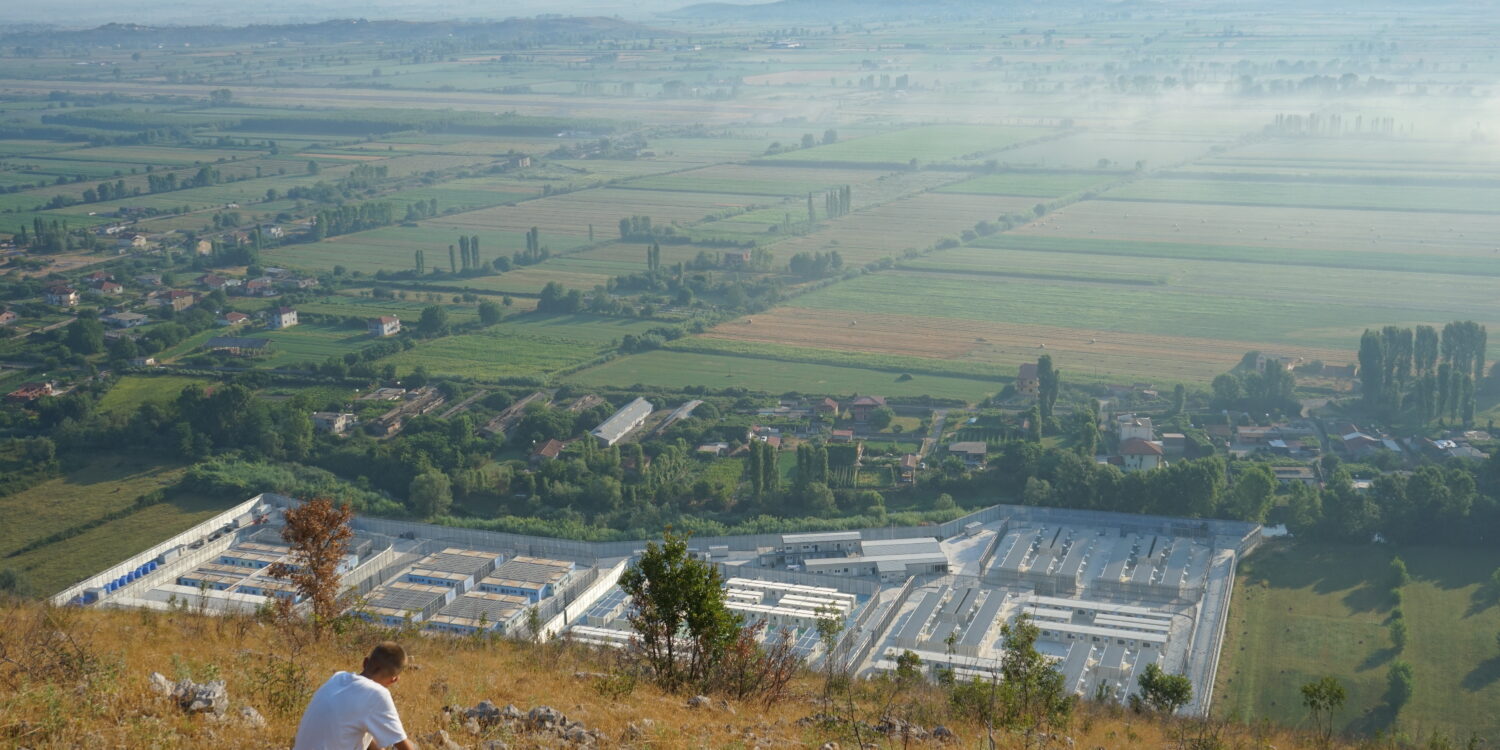
Two-story prefabricated metal modules comprising the first section of the Italian Detention Center in Gjadër, Albania, as seen from the nearby mountain. October 2024.
ALL PHOTOS AND INFOGRAPHICS COURTESY OF KLODIANA MILLONA
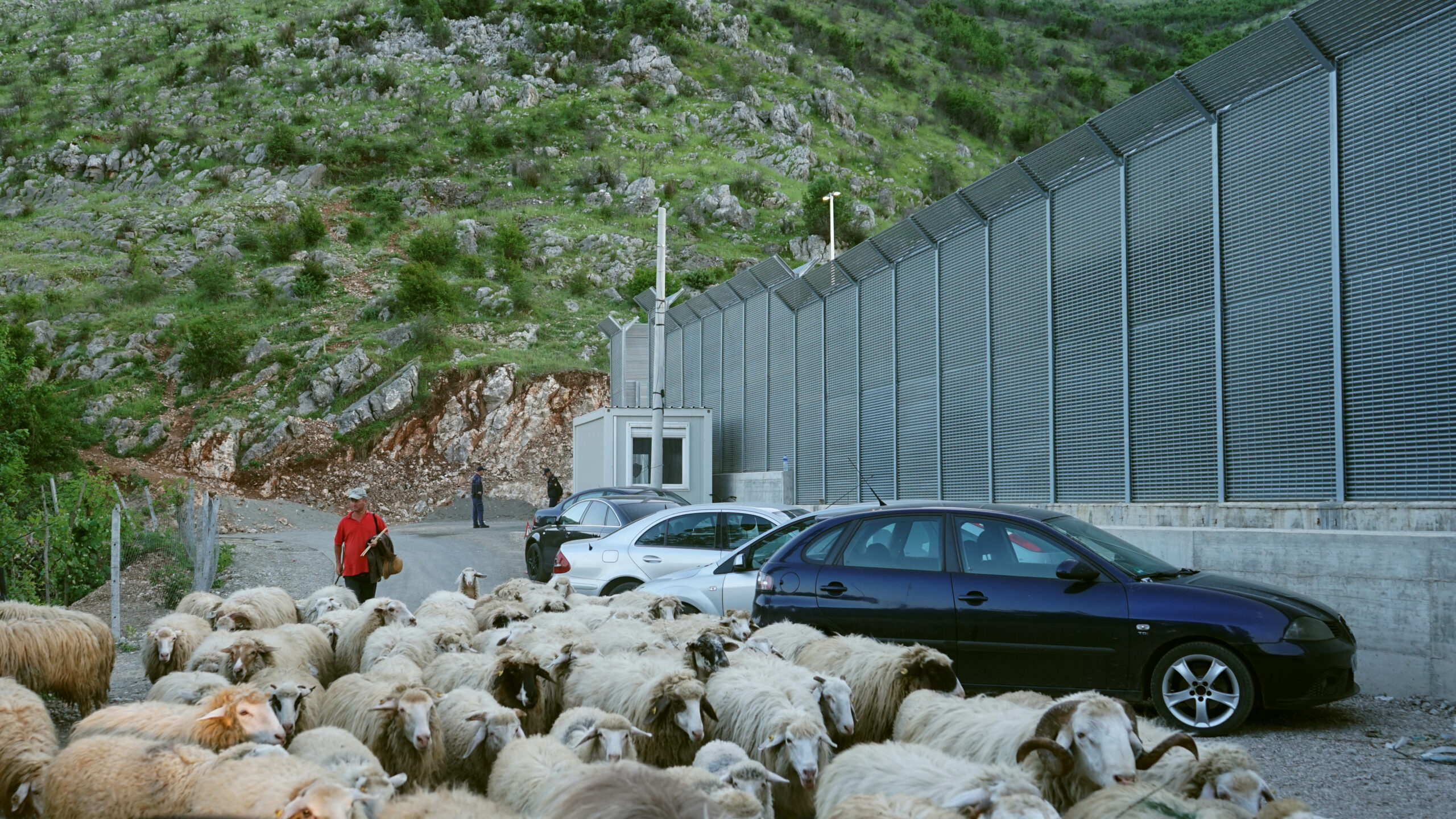
Local shepherd grazing sheep beside the fenced perimeter of the detention site in Gjadër, Albania. May 2025.
Fictionalized Hospitality
“Hospitality centres—that is how they are referred to in European Union legislation,” stated the Albanian prime minister in defence of the controversial Italy–Albania migrant deal. Framed as a reciprocal gesture, “Italy has done a lot for us,” he said, referring to the supposed hospitality Albanian refugees once received when fleeing by boat towards Italian shores in the 1990s. But this historical reference stands in jarring contrast to the Albanian lived experiences of that era: boat pushbacks, mass detentions in stadiums, and political discourses of invasion. In the name of humanitarianism, Italy has constructed extraterritorial detention centres on Albanian territory, facilities framed as sites of care but operating as carceral enclosures. These are architectures of fictionalised hospitality: structures of confinement aesthetically and linguistically repackaged to obscure the violence they enact on the bodies of those detained.
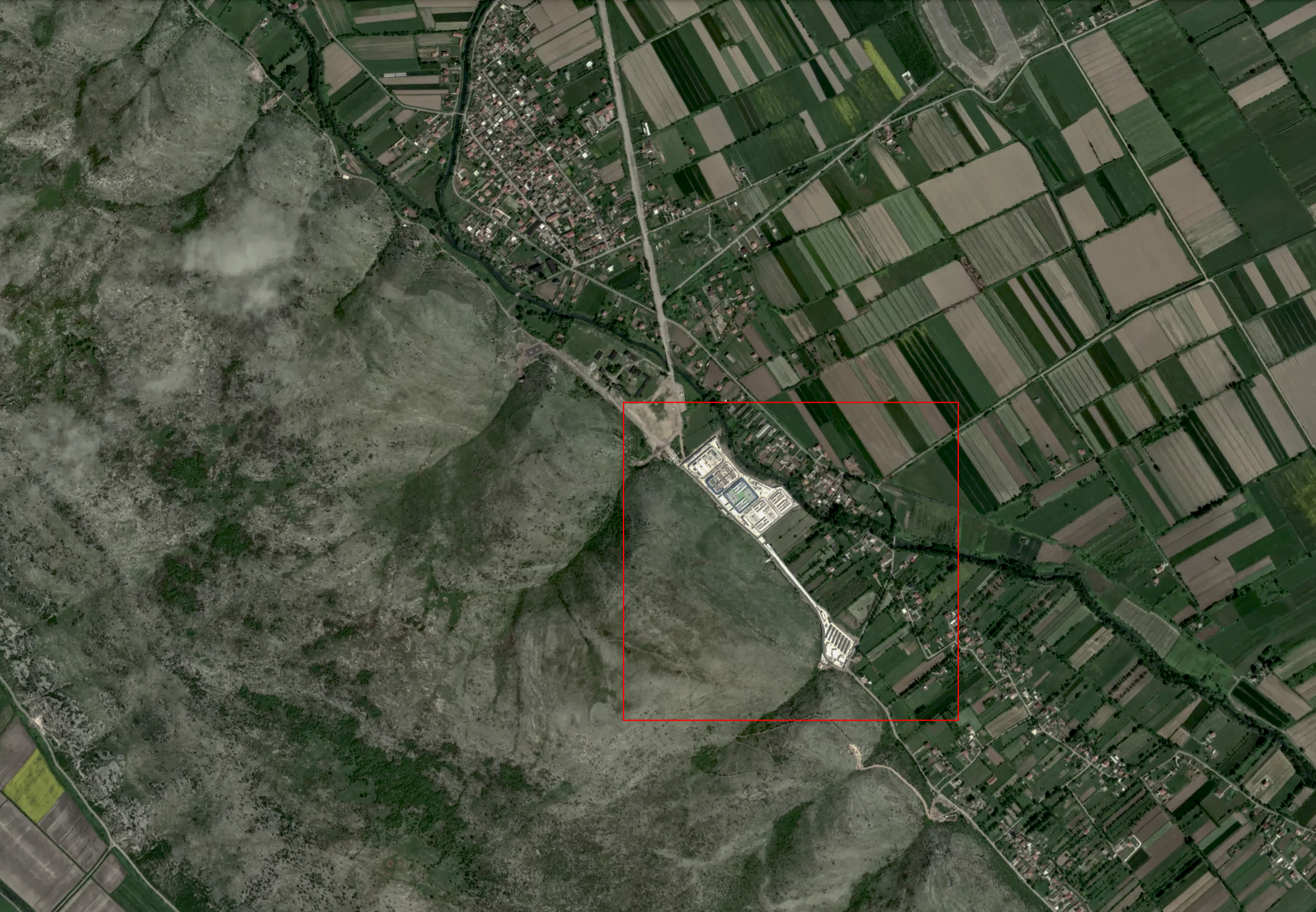
Satellite imagery of the Italian detention site in Gjadër, Albania, highlighting its disproportionate scale (70,000 m²) and the use of surrounding landscape features—mountain to the west, river to the east—to reinforce its carceral design. Copernicus Sentinel-2 imagery (2025), visualized via Sentinel Hub EO Browser.
At a joint press conference in late 2023, the Italian and Albanian governments presented the signed Memorandum of Understanding by championing it as the future model of migration governance. The announced pact, introduced as part of Italy’s broader efforts to dissuade migrants from reaching Italian shores, enabled the construction of migrant centres on Albanian territory. These enclaves operate under Italian legislation, with Italy exercising full authority, while Albania’s role is limited to supervising the external perimeter of the centres. The Italy–Albania deal exemplifies both border externalisation, by relocating functions typically carried out within a state’s own territory to a third state, and extraterritorialisation, as Italy retains full authority over the asylum procedures and border controls it has offshored. These spatial strategies enable legal obfuscation, placing migrants beyond the reach of EU law while maintaining its aura of legality.
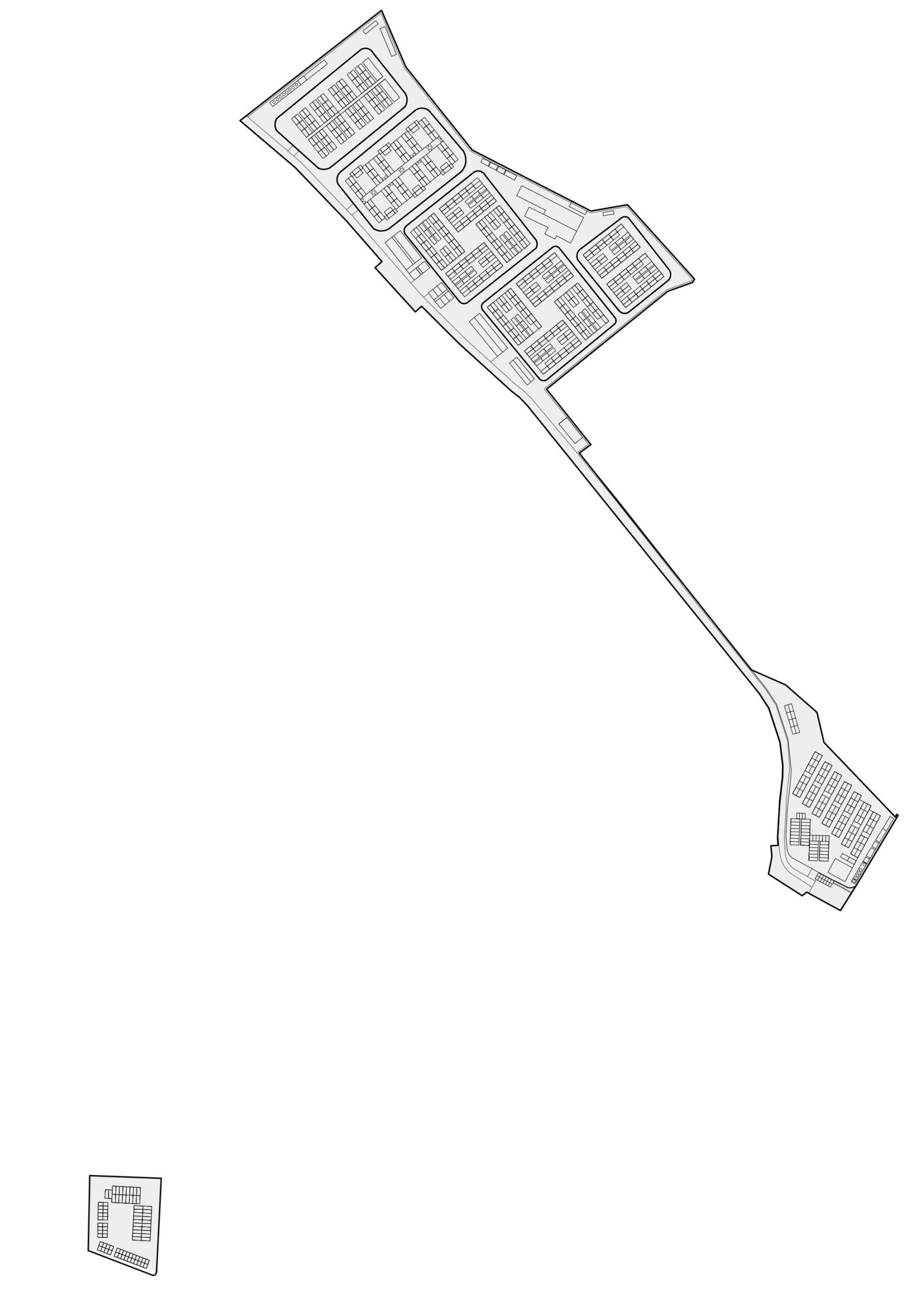
Italy within Albania: Sealed-off parts on Albanian soil designated as Italian territory, hosting Italian detention enclaves
Design as Detention
Migrants intercepted in international waters by the Italian coastguards are transferred to Albania. Without consideration for their individual circumstances and long traumatic journeys, their asylum claims are pushed into fast-track processing. Criticised by human rights lawyers as an unlawful procedure, the accelerated assessment of asylum applications under arbitrary detention significantly limits the time for preparation and access to legal assistance. The fear of a rapid decision jeopardises the mental health of the asylum seekers under detention. In terms of procedural rights, shorter deadlines can potentially lead to more arbitrary and less informed decisions on the asylum claims. These accelerated offshore procedures apply only to those migrants intercepted at sea who come from so-called safe countries. This is based on the presumption that their countries of origin pose no risk. After a first medical screening conducted in international waters, only those deemed healthy and non-vulnerable are selected. In practice this excludes women and minors. This means that only men, categorised as fit for detention, can be transferred and arbitrarily detained in offshore centres in Albania. Those not granted refugee status face expulsion while the safeguards guaranteed by EU asylum law are bypassed.
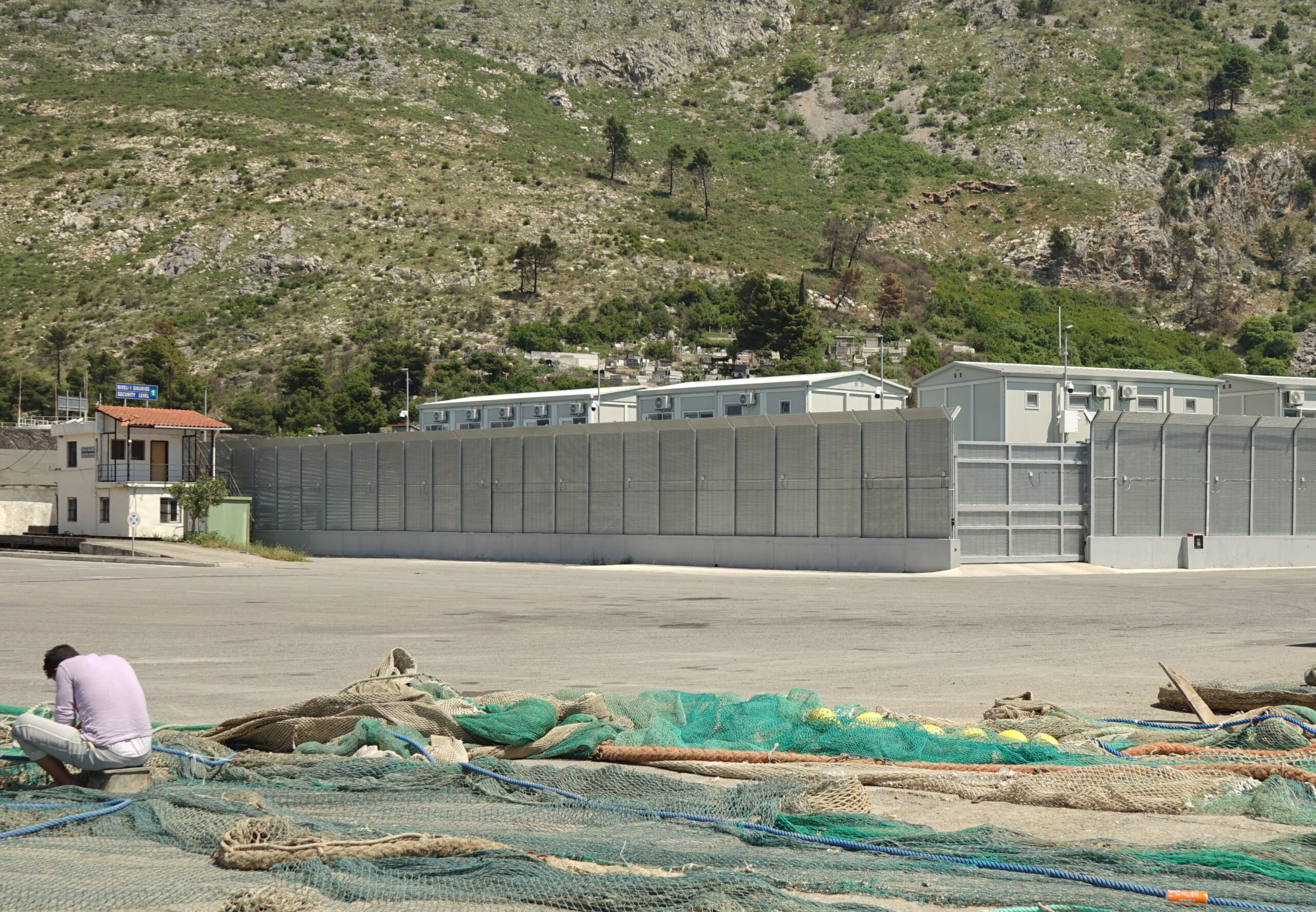
The Italian hotspot and initial processing centre inside the port of Shëngjin serves as the first entry point for migrants deported to Albania. May 2025.
The initial processing centre is located inside the Shëngjin port, a coastal touristic city twenty kilometres south from Gjadër. The Shëngjin hotspot, sealed off by a five-metre wall, serves as the first entry point for migrants deported to Albania. Upon disembarking, they are escorted into an enclosed zone where they undergo identification procedures and medical screening. It is here that Italian authorities register asylum applications and assess whether individuals meet the criteria for vulnerability. Those who do are excluded from offshore procedures and returned to Italy. The remaining migrants deemed ‘fit for detention’ are transferred to the camp in Gjadër which is divided into three sections. The first one, with a capacity of 880 places, is designated for asylum seekers whose claims are processed under a fast-track mechanism within 28 days; the second pre-removal centre, holding up to 144 people, is for migrants whose claims have been rejected and are awaiting repatriation; the third section, with 20 places, constitutes a de facto prison for migrants undergoing criminal proceedings.
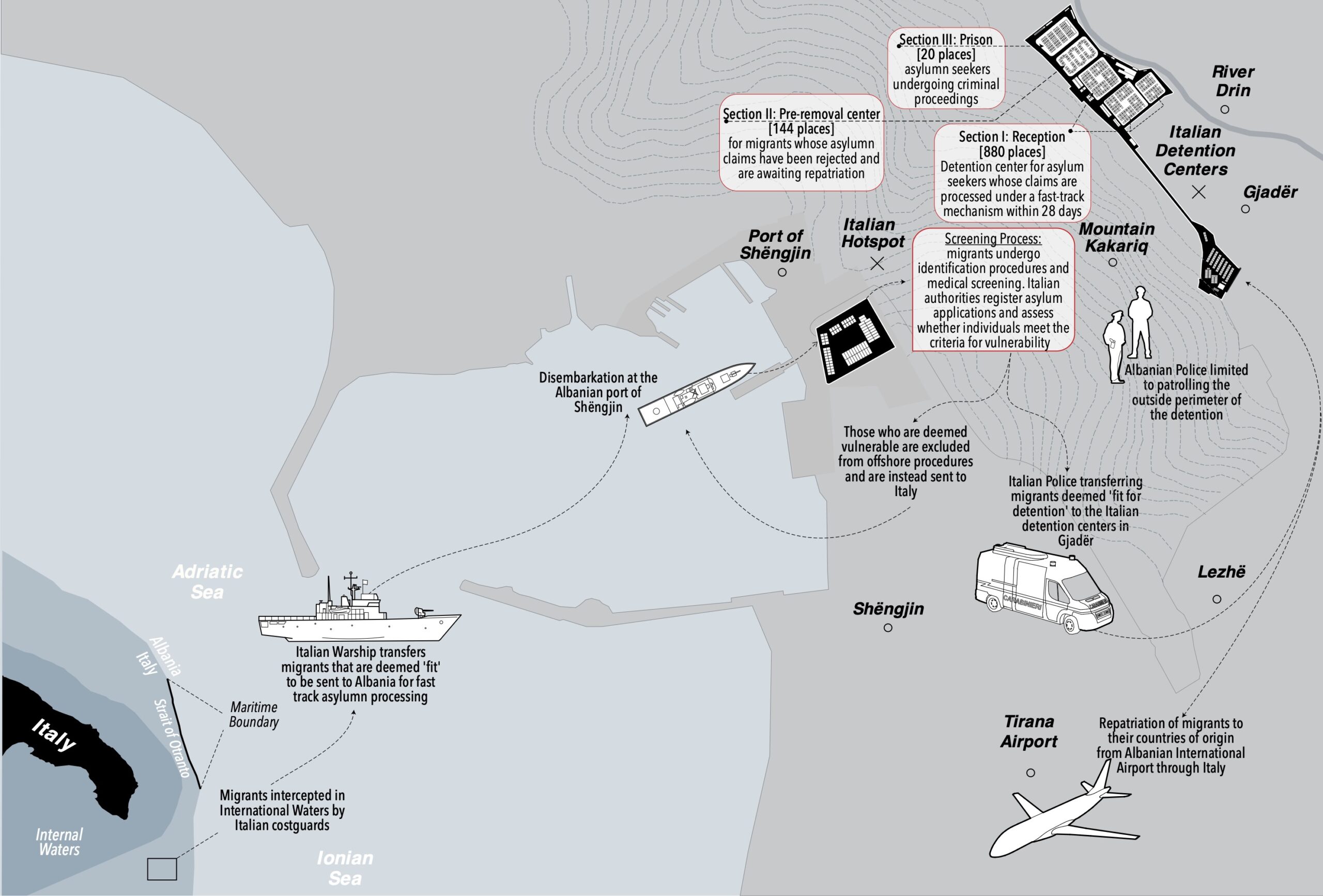
The Italy–Albania Migrant Deal in Practice: Reorganized Spaces, Enforced Architectures, and Affected Territories

Following the legal suspension by the EU Court of Justice of the first operations, the centres have been repurposed from their initial function. Formerly serving as extraterritorial asylum processing facilities, applied only to migrants intercepted at sea before reaching Italian shores, now they are turned into deportation hubs where undocumented migrants with a deportation order are directly sent from within Italy to Gjadër. Politically criminalised as highly dangerous delinquents, the migrants are escorted in handcuffs from Italy to Albania. Once inside the Gjadër camp, migrants vanish behind the walls that isolate them from the outside world. The only presence that reaches inside is the mountain of Kakariqi, which marks the physical boundary of the camp while remaining the only visible element beyond its fences. As such, the landscape is weaponised for coercion and, paradoxically, serves as the only point of reference to an outside that remains unreachable. The migrants’ daily life–eating and socializing–unfolds with the same individuals locked up in prefabricated cells within a confined, cage-like courtyard.
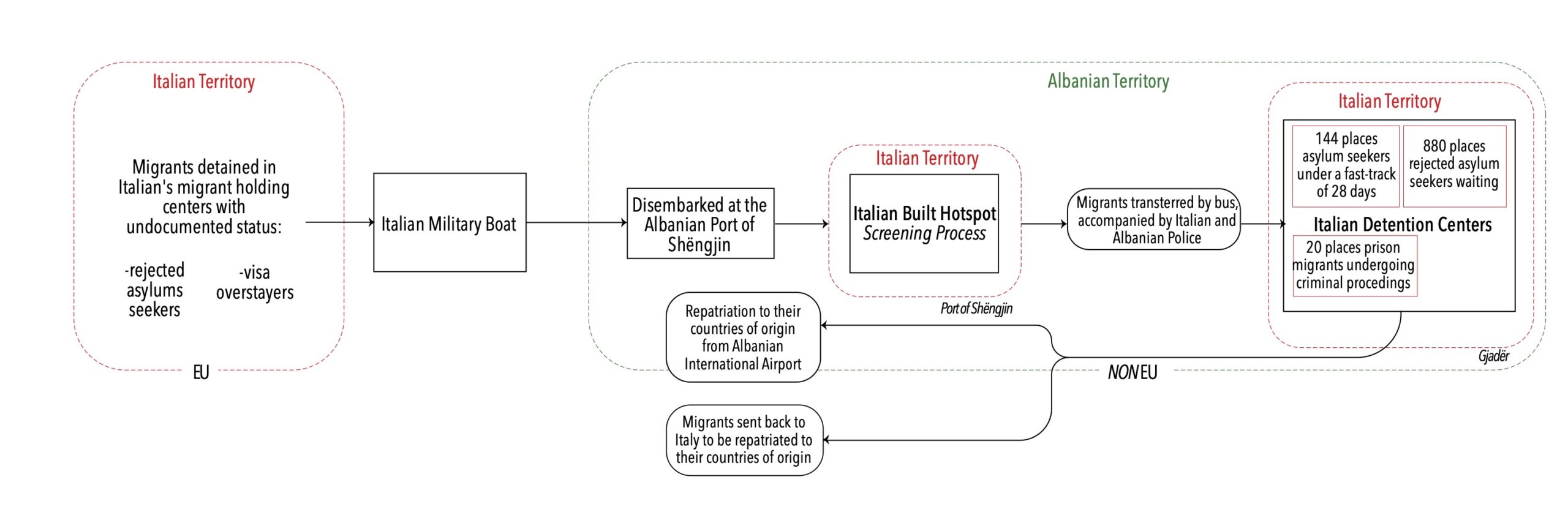
The Italy–Albania Migrant Deal in Practice: Extraterritorial Asylum Processing Facilities Repurposed as Return Hubs
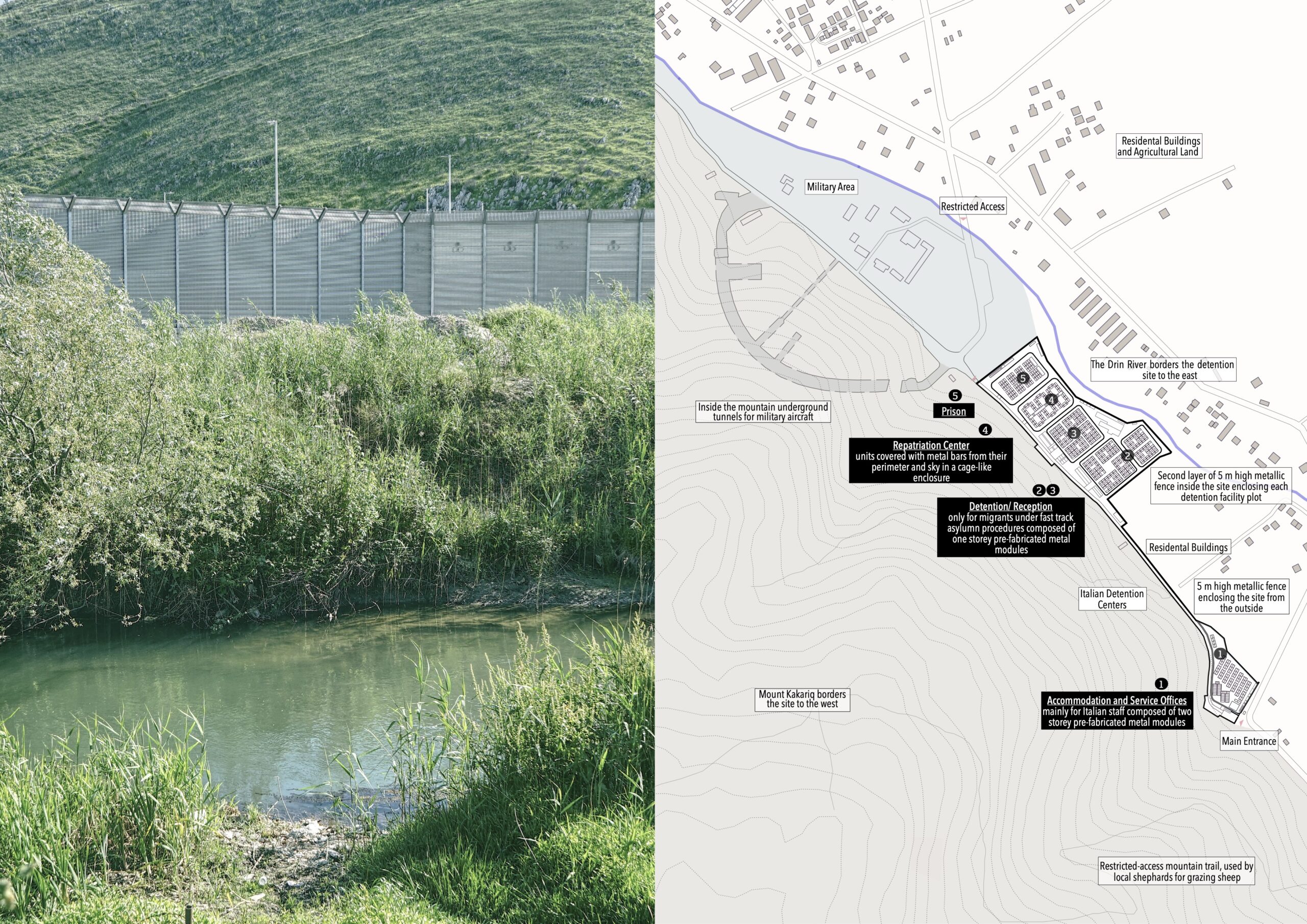
Picture on the left: The Italian Detention Center’s outer fence, seen from a family courtyard along the River Drin in Gjadër. May 2025.
Picture on the right: Site plan of the detention complex, assembled through scraps of retrieved official documents, open source imagery and situated testimonies of former workers.
Stripped of their humanity, those detained are reduced to mere numbers and placed under supervision from the centralised surveillance rooms inside the camp. The scapegoating of migrants and framing of displacement as a force to be governed have helped naturalise the deadly nature of borders with people on the move being treated as data to be processed. As explained by members of human rights organisations allowed inside for inspection, “Whenever we want to talk to migrants, the authorities ask us “which number would you like to speak to,” says Dutch MEP Anna Strolenberg. No nationality, no name, no age provided. The language used by political leaders to ‘humanise’ these detention centres, through terms such as ‘hospitality,’ fails to obscure the hostility embedded in its violent design, which radically isolates those detained from the outside world along with their bodies, voices, and lives. Hence, the concept of hospitality is distorted when opposed to the symbolic power these centres have gained as a threat of extraterritorial removal for migrants reaching European territory.
While publicly introduced as places of care by the former Italian ambassador, these detention camps have been aestheticised through design features such as all-inclusive facilities, as if it was an attractive holiday resort. But how can arbitrary confinement serve as a model of hospitality for migrants? The trauma inflicted during detention in the Gjadër camp has tragically pushed many to self-harm, with numerous suicide attempts reported among those held captive.
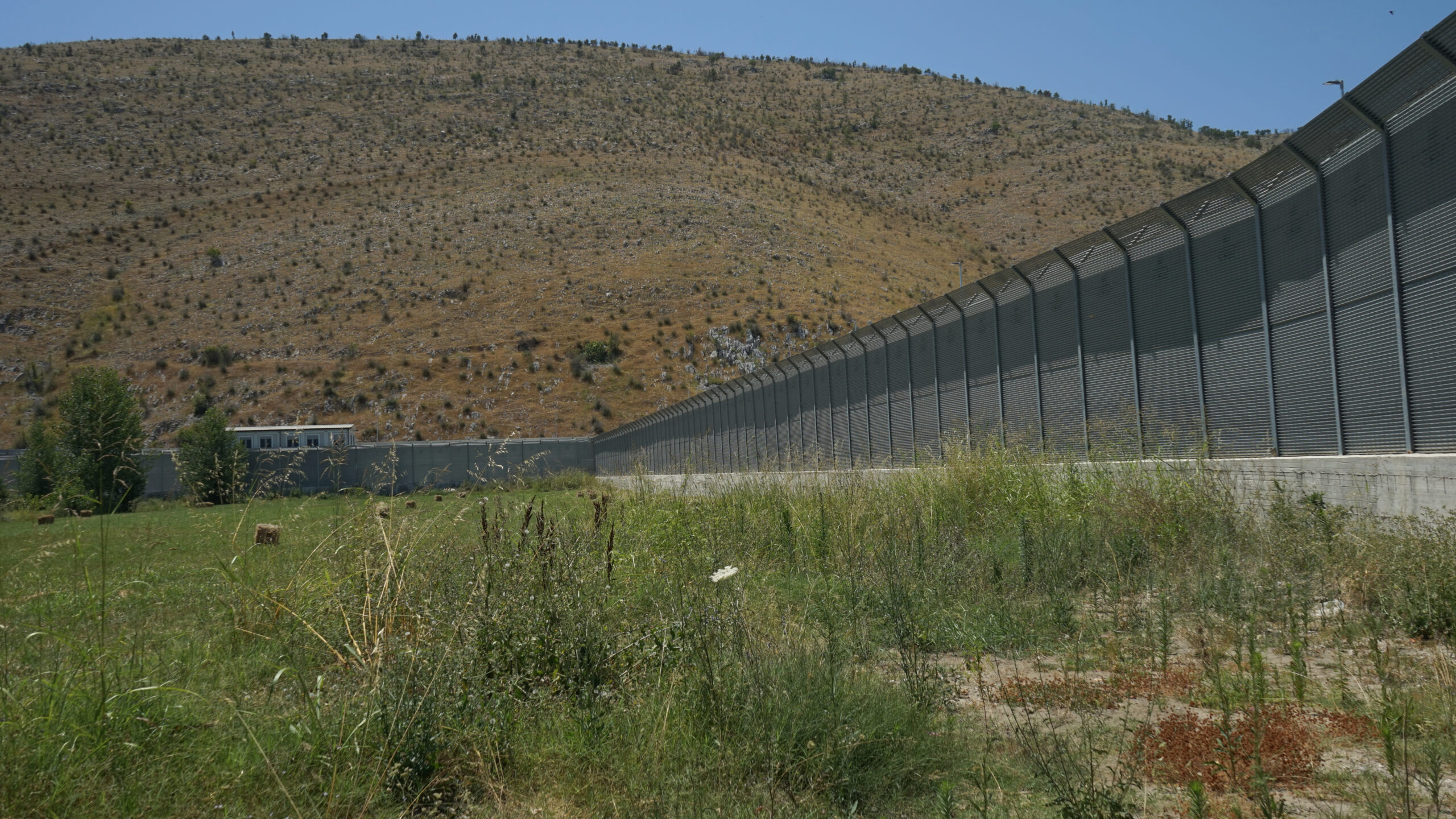
Five-metre-tall fence of the Italian Detention Center cuts across Gjadër’s landscape. July 2025.
A continuum of colonial confinement: the circular genealogy of bordering
Gjadër now sits suspended between hypervisibility, as part of the spectacularised enforcement of Italy’s border control architecture, and invisibility, perpetuated by Eurocentric colonial constructions of emptiness in territories where border externalization unfolds, lands devoid of the histories and presence of local populations in order to justify extractive activities. As part of the regime of the visual, which is animated to render spectacularly visible migrant illegality and normalise the violent carcerality of borders, a series of architectures are enforced, culminating in the camp itself. Their material presence in the Albanian collective memory is not new. Each of these architectures is a colonial ghost in the form of border infrastructure that haunts and reverberates within the local context, challenging the emptiness to which it has been ascribed. The three transfers of intercepted migrants from international waters under the Italy–Albania deal carried out by Cassiopea-class military warships, involved only male migrants: 16 in the first, 8 in the second, and 49 in the third operation. Measuring 79.8 metres in length and 11.8 metres in width, and equipped with guns and fire-control systems, these ships loomed large with a theatrical enormity as they approached the Albanian port of Shëngjin.
Disproportions do something in space—they don’t just mark inequality, they manufacture it, stretching the optics of threat to justify the violence of response. The ships’ sheer magnitude—set against the small number of unarmed, displaced individuals they carried—performs a calculated excess. It is not about the logistics of transport; it is about choreography: migrants are not rescued but intercepted, not assisted but contained. The visibility of intercepted men—confined first in militarised ships and later behind five-metre walls in Gjadër—produces a visual grammar in which masculinity is rendered synonymous with danger. These semiotics are not foreign to Albania, nor is the Italian accent articulating it. With the same length and grandeur as the Cassiopea, produced by the same shipbuilder (Fincantieri S.p.A), nearly three decades earlier, in the stretch of sea that separates two Europes, another Italian warship, the Sibilla, was deployed to chase and push back the Katëri i Radës, a boat crammed with Albanian refugees fleeing towards Italy in 1997. This naval blockade culminated in the Otranto tragedy where 81 Albanians were drowned, mostly women and children, 31 of them under the age of 16, when the overloaded vessel capsized after it was hit by the Italian Navy corvette Sibilla. Twenty-four bodies remain missing to this day. The sea remembers.
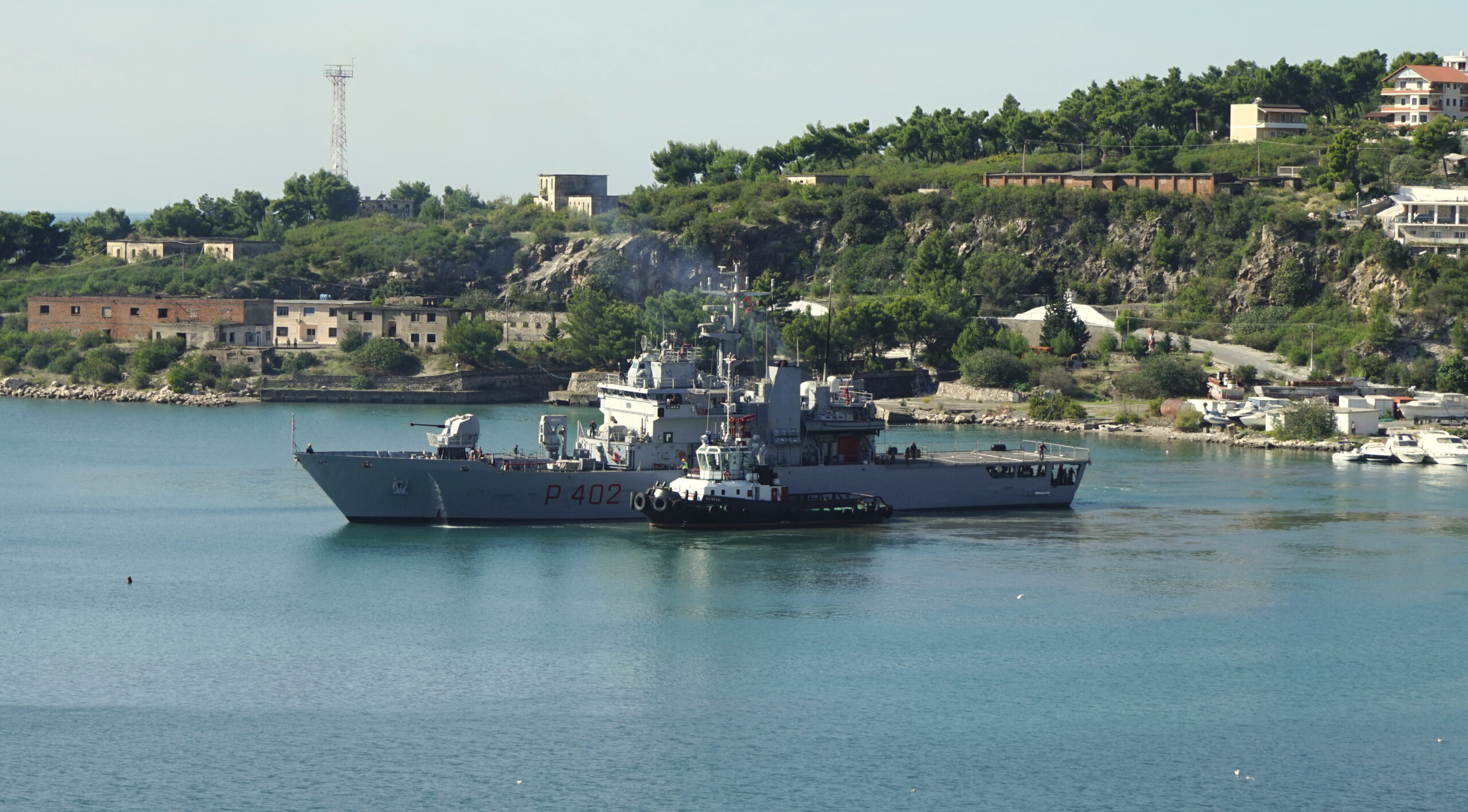
The Italian Cassiopea-class military ship “Libra” leaving the Albanian port of Shëngjin, on October 16, 2024, after transferring the first 8 migrants intercepted at sea to the Italian built hotspot in Albania.
That moment marked the violent threshold of Italy’s migration securitisation era, with Albanians cast as its first post–Cold War ‘illegals.’ Fleeing in thousands from the political unrest that followed the collapse of communism, Albanians were soon vilified as dangerous delinquents when reaching Italy by boat. With a growing political consensus to stop what was framed as ‘Albanian invasion,’ Italy enforced a naval blockade to push back boats carrying Albanian migrants, patrolling the sea even within Albanian waters. The Katëri i Radës shipwreck is inseparable from these early Italian blockades and pushback operations at sea, and the Italian-Albanian bilateral agreements that foreshadowed later Italian-Libyan and Italian-Tunisian agreements.
“The way to face the Albanians’ invasion is to throw them back into the sea,” declared Irene Pivetti, a former Italian parliamentarian, in 1997. Calling for the defence of Italian borders from the Albanian arrivals, these political statements ran rampant in the 1990s when Albanians fleeing en masse trying to reach Italy, came at the center of a moral panic. The arrival of the ship ‘Vlorë’ in Bari on August 8 1991, with twenty thousand people on board, is still ingrained in the Italian collective memory. Before being expatriated, thousands of Albanians were confined at the local stadium, which was transformed into a camp which Giorgio Agamben compared to concentration camps. So deeply has the image been etched into the visual archive of refugee arrivals that it continues to be carelessly recycled decades later by journalists who serve as the co-architects of the spectacle of illegality. Stripped of its specific history, it is routinely misused to illustrate unrelated crossings in the Mediterranean, such as the arrival of Syrian refugees, collapsing distinct tragedies into a single, generic image of migration-as-threat.
As scholar Maurizio Albahari argues, the early experiences of Albanian migrants confined to the stadium by the Italian authorities paved the way for the institutionalisation of what came to be framed as immigrant holding centres. They are the blueprint for today’s Gjadër detention centres. Albania, long positioned as Europe’s internal Other—orientalised, Balkanised, and peripheral—now is made to mimic European border control through delegated power. Albania is ‘almost the same, but not quite’; almost inside the border, but functionally outside. Its territory becomes a theater for Europe’s carceral choreography, where the techniques of border control are rehearsed and refined. Albania now enforces immobilisation on behalf of others, those deemed even more disposable, more foreign, more threatening, while remaining immobilised itself. As historian Enriketa Pandelejmoni argues, Fascist Italy exerted colonial influence and control over Albania under the guise of modernisation—initially through economic and political dominance (beginning in 1925), and later through outright military occupation (from 1939 to 1943). In this post-colonial friendship with Italy, the irony is brutal: as Albanians continue to make up one of the largest nationalities locked up in Italian prisons and in asylum detention, their homeland is simultaneously converted into an extraterritorial extension of that very carceral regime. In another bitter twist of circular bordering, on 8 April 2025, the Italian Navy patrol vessel Libra, previously used for the first two transfers of migrants intercepted at sea to the Gjadër detention centre, was officially donated to the Albanian Navy.
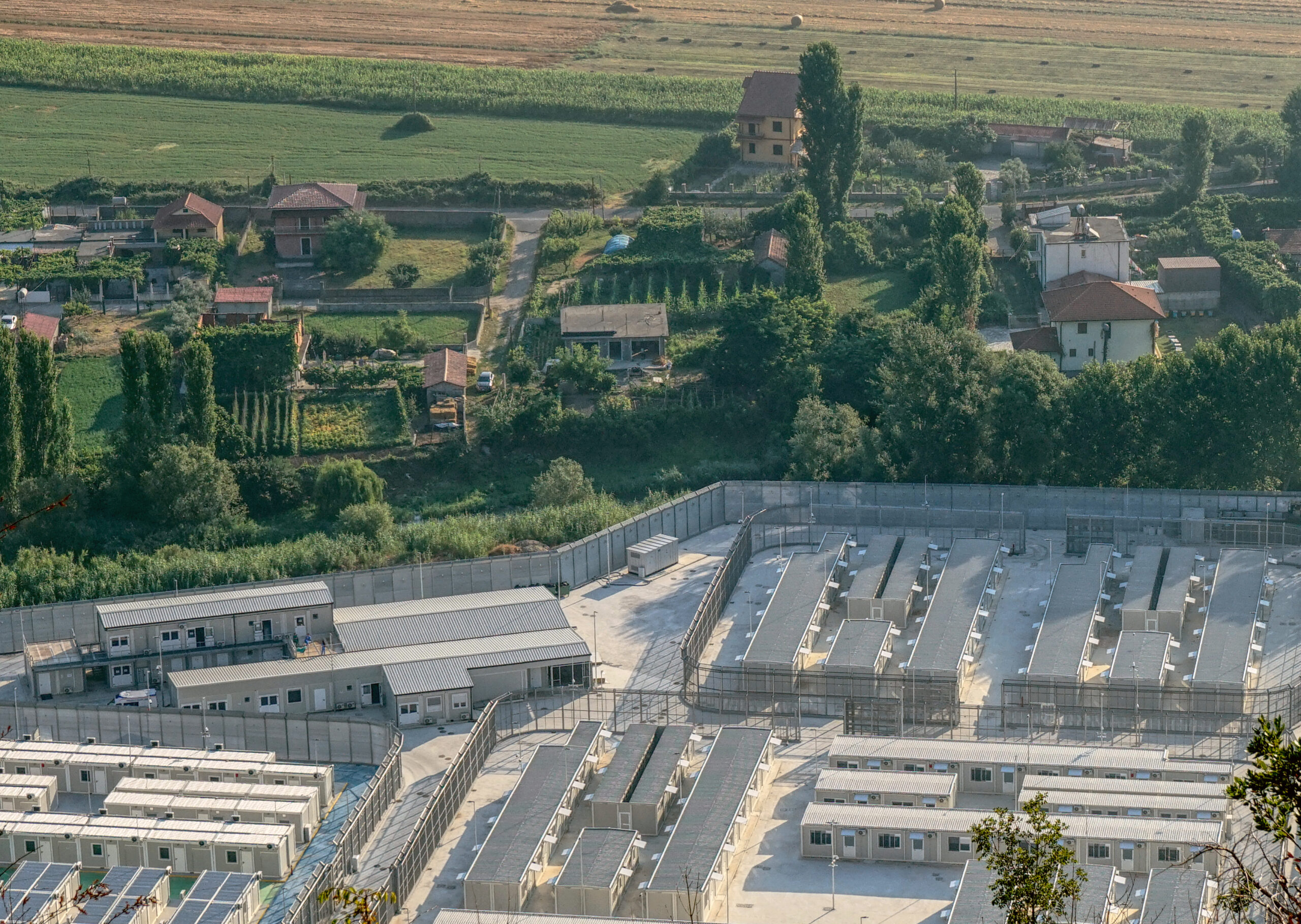
Agricultural fields, family houses, the River Drin, and Italian Detention Centers in Gjadër, Albania. July 2025.
Immigration diplomacy in the colonial ordering of border control
Even though border externalisation has long been a mechanism for the EU to control migration beyond its jurisdictional borders, materialising in deals such as those with Turkey, Libya, Tunisia, Mauritania and others, it has evolved into a far more expansive strategy through increased cooperation with so-called third countries. This is evident in the new migrant deals negotiated with neighbouring non-EU states across the Balkans to move borders extraterritorially by offshoring detention centers at the ‘peripheries’ of the continent. These tactics for managing migration beyond the EU’s borders have advanced a new form of migration diplomacy. As argued by scholar Piro Rexhepi, Western Balkan states positioned along the EU’s frontier have gained diplomatic leverage by acting as its gatekeepers. By extending Italian borders into Albanian territory, these carceral centres sustain ‘white enclosures,’ filtering ‘undesirable’ migrants out of Europe and perpetuating distinctions over who counts as more fully human. Despite the reframing of detention centers as ‘humanitarian’ confinement centres, it is visibly clear that their infrastructural brutality serves as a mechanism of racialised population control. They are violent apparatuses that arbitrarily deprive the liberty of men demonised as delinquent, further solidifying the chain of racial injustice.
As legal scholar Nadine El-Enany explains, this policy deflects attention away from the root causes of displacement, many of which are grounded in histories of European extractivism impoverishing and destabilizing the very countries from which most asylum seekers originate. Many of the politicians in the EU scrambling to offer ‘solutions’ for the ‘problem of migration’ forget that their governments themselves are the architects of these conditions. Despite all the spectacularised cruelty performed to dissuade migrants, people will continue taking dangerous routes when the alternative to movement is death. They will continue to do so even if it means facing the risk of forced removal and detention in remote offshore centers in Albania. Far from representing hospitality, these camps are architectures of exclusion, designed to erase Europe’s legal and moral obligations by outsourcing them beyond its borders. They are spatial manifestations of a regime that fictionalises care while institutionalizing abandonment and cruelty.
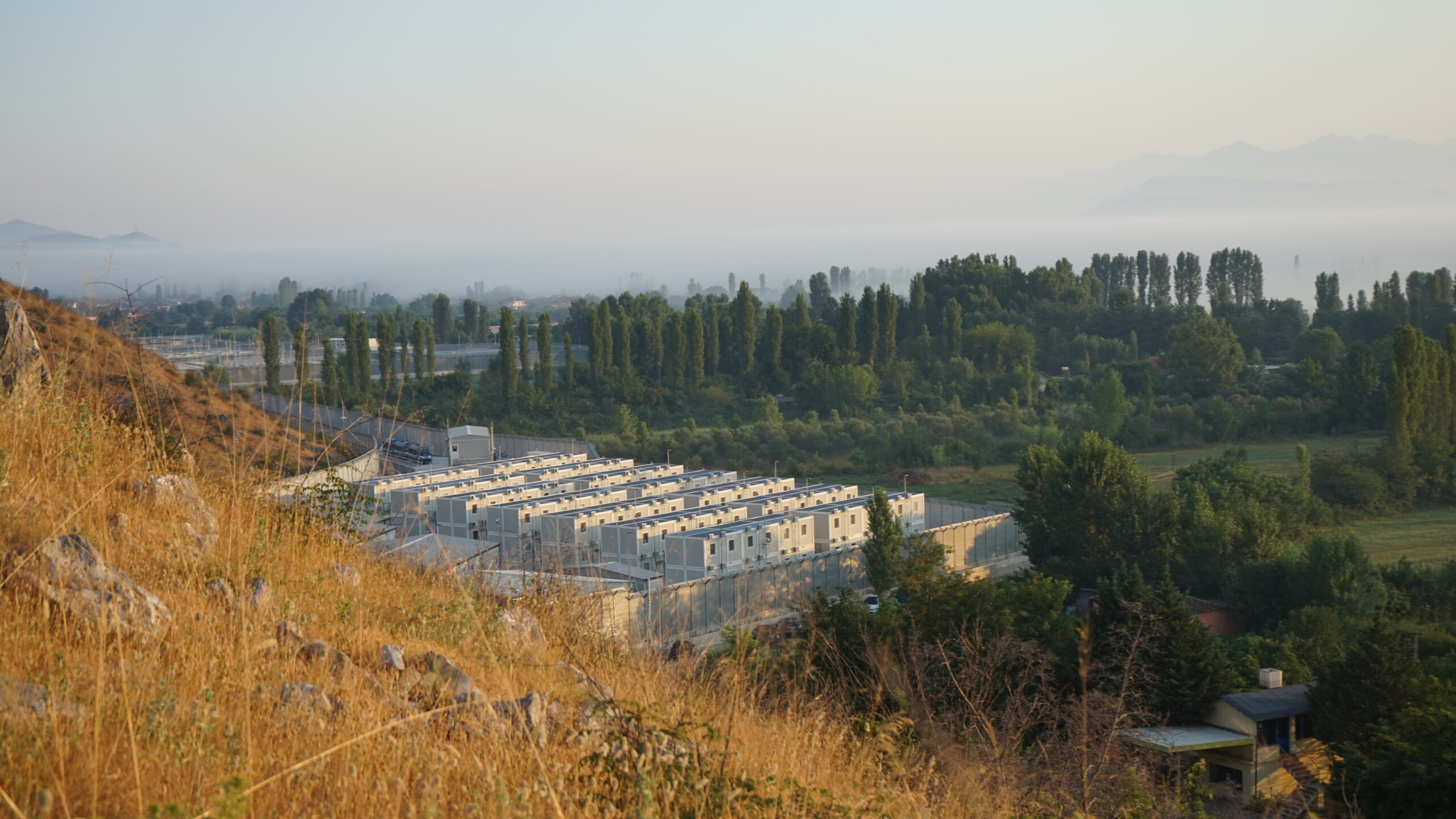
Italian Detention Center in Gjadër, Albania, July 2025.
* Name altered for anonymity.