This article is part of the FA special series Everywhere Walls, Borders, Prisons.
On December 31st, 2023, the Kurdish-Iranian activist Maysoon Majdi was arrested soon after her arrival on a migrant boat on the coast of Calabria, Southern Italy. Along with some forty other people, she sailed for five days in precarious conditions on a hazardous route from Turkey, one of the many life-threatening paths that migrants and refugees have to take to reach European soil. Maysoon had fled Iran only some months before, after facing persecution for taking part in the feminist movement “Woman Life Freedom.” But once ashore in Italy, she faced immediate arrest, charged with smuggling people and thus facilitating illegal immigration – an all-too-easy accusation under the increasingly repressive regime of Italy’s current far-right government.
The case of Maysoon Majdi was not an isolated event, but one instance of a broader crackdown on migration and political dissent waged by PM Giorgia Meloni. Majdi’s incarceration highlights an alliance between Italy’s systems of migration management and political repression. These two regimes meet within prison architecture, where incarceration and debilitating conditions are used strategically and systematically against migrants as well as those politically active in the fight against fascism. Since the beginning of her term, Meloni has conducted an aggressive campaign against what she considers ‘threats’ to the country’s national security — a blurred spectrum that includes migrants and political militants. She has repeatedly promised to “look for smugglers across all the terrestrial globe,“ as her government’s most recently approved bill imposes a naval blockade against migrants’ boats attempting to reach Italian shores. These policies comprise a heightened regime of detention, which materialises through a carceral continuum between criminal prisons and detention centres for undocumented migrants.
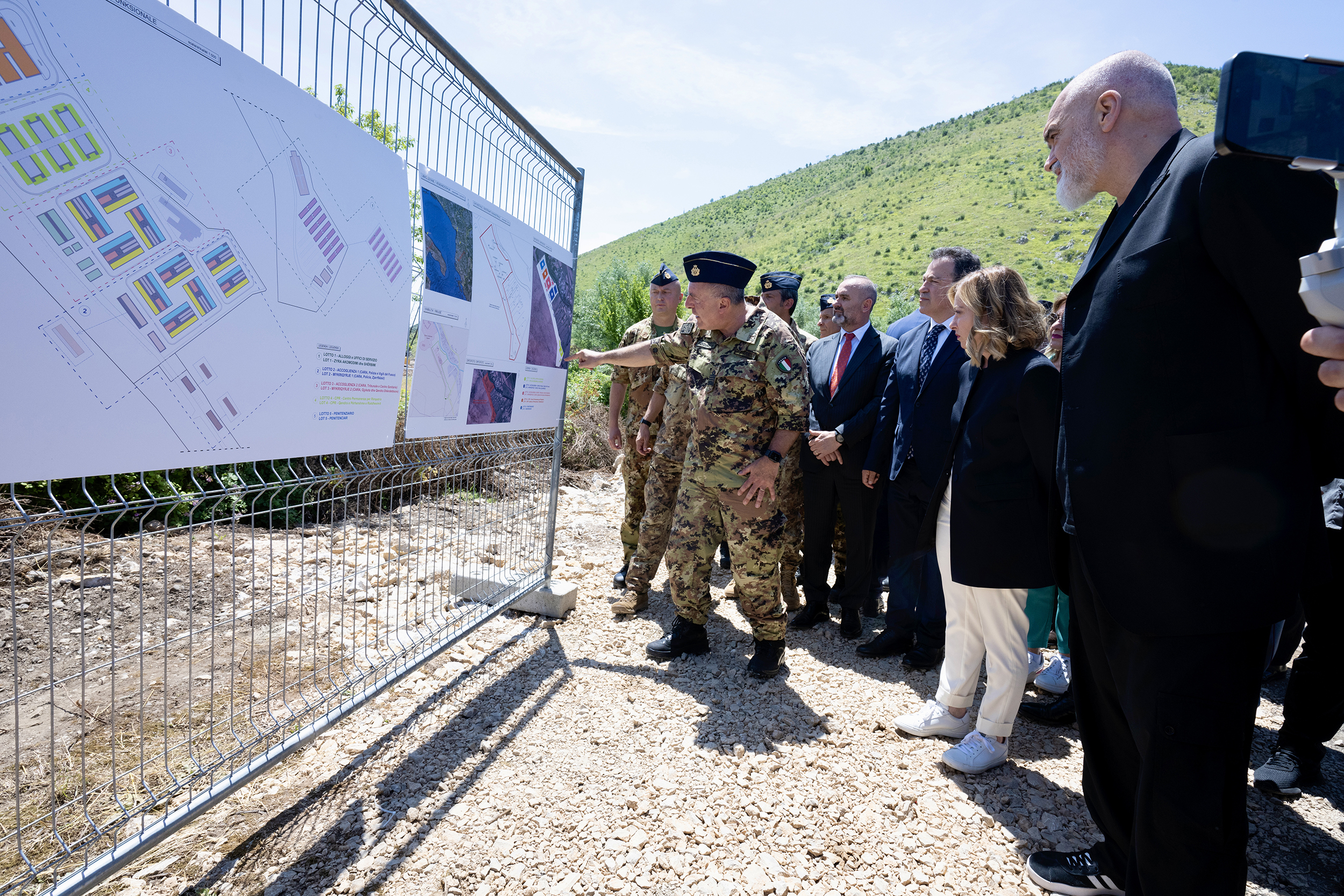
Italian PM Giorgia Meloni visiting the new detention centre for migrants in Gjader, Albania, on 5 June 2024
Italian Government / CC-BY-NC-SA 3.0 IT
Maysoon Majdi’s experience is a case in point. She was incarcerated for 302 days in the prison of Castrovillari (Calabria), and then in the Casa Circondariale of Reggio Calabria “Giuseppe Panzera,” accused of being what in Italian is called a scafista — a boat smuggler. But had she not been arrested and sent to jail on smuggling charges, she would have likely been confined in one of the detention centres where migrants awaiting identification, asylum hearings, and deportation are held.
Under Meloni, the risk of ending up in detention on any given day is a reality for many Italians and migrants who find themselves within Italian territory. In four years, her government has issued several laws that many NGOs warn, will soon likely increase the prison population. Securitarian laws like Decreto Cutro, Decreto Caivano, and DL 1660 or Decreto Sicurezza, that respectively tackle migration, crimes committed by minors, and street protests and blockades, will produce new criminalised subjects, which in turn will crowd the crumbling Italian detention infrastructures. Recently approved by the Senate, DDL 1627, or DDL Gasparri, will further this logic by conflating anti-Zionism and antisemitism, as a means to criminalise the large movement for Palestine that rocked Italy in the autumn of 2025. Within the government’s zero tolerance (“Nessuno sconto”) stance – as expressed by Cabinet Vice-president Matteo Salvini – detention spaces are increasingly part and parcel of the fight against the internal and external “Enemy.” Spaces of incarceration have become central to this broader securitarian project. Under Meloni’s ‘law and order’ regime, the structural inadequacies of Italy’s detention facilities have been weaponised against minorities, racialised people, and any form of political opposition.
One of the most relevant and discussed among these new legal provisions, the Decreto Cutro, exemplifies this logic. Named after the disastrous shipwreck that washed 94 bodies ashore the beaches of Cutro, in Calabria on February 25th, 2023, Decreto Cutro tightens the internal rules for granting political asylum and abolishes special humanitarian protection for people who could not be deported for life-threatening reasons. The law also allows migrants to be detained in one of the eleven repatriation centres for up to 18 months. These centres are called CPRs (Centri di Permanenza per il Rimpatrio), and they are scattered across the Italian peninsula and even abroad, in Albania. Tightening previous legislation from 1998, Decreto Cutro moreover allows alleged scafisti like Maysoon to be condemned to up to 30 years of prison.
CPRs, along with CPAs (Centri di Prima Accoglienza; officially, centres for short term detention upon arrival), CAS (Centri di Accoglienza Straordinaria; usually, centres for long-term detention) and so-called “hotspots” or, as renamed by Decreto Cutro, CTRA (Centro di trattenimento per richiedenti asilo), function de facto as jails where migrant people are imprisoned in dire conditions for varying periods of time.
These centres were first introduced by law in the late-1990s under the centre-left government of Romano Prodi, when, for the first time, Italy sanctioned the detention of people for so-called illegal immigration. According to state legislation, illegally entering the country was — and continues to be — an administrative violation, and not a criminal offence. As such, legal proceedings should follow accordingly; and yet, it is difficult to spot substantial differences between the spatial logic of a migration centre and that of a criminal prison. This continuity is part and parcel of the political project of criminalising foreign-nationals and blurring the boundary between administrative and criminal detention.
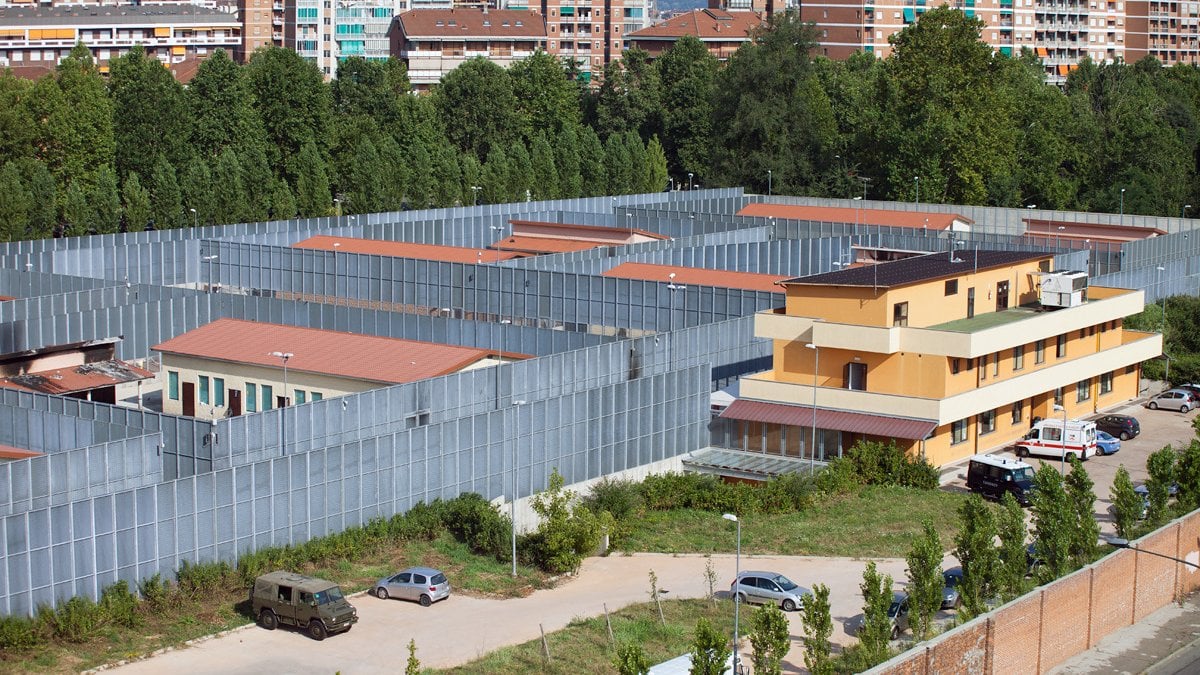
The centre for repatriation (CPR) in Turin, Italy
Located in isolated areas in the outskirts of urban centres, migrant detention centres are usually precarious structures, made of single-story pavilions surrounded by tall metal fences and concrete walls, and, at times, surveillance towers. When present, open-air courtyards and walkways are covered with metallic mesh, turning them into cage-like volumes. The infamous CPR in Gorizia-Gradisca d’Isonzo, in the northeast of Italy, is nothing more than a series of shipping containers arranged in a line over a concrete slab, surrounded by walls and barbed wire. Brick buildings on the site are reserved for guards and police personnel.
The conditions within these centres speak to a broader logic of debilitation embedded in the governance of migrant and refugee people. As disability scholar Jasbir Puar writes in The Right to Maim: Debility, Capacity, Disability, ‘debilitation’ indicates the “slow wearing down of populations,” the employment of (purposeful) harm as a tool of control. Migrants are made to live with out-of-order toilets, excessive heat, and rotten food in CPRs . NGOs and activists routinely register systematic violations of basic human rights within them. In 2024, a report published by the European Committee for the Prevention of Torture detailed several cases of ill treatment and excessive force against detained people. Many detainees are often left without any information regarding their repatriation status, and dwell within a spatial-temporal limbo. Prior to Decreto Cutro’s recent modifications, this period amounted to a maximum of three months of detention. Now that the term can be as much as six times longer, the consequences of incarceration within these neglected spaces are bound to worsen.
Prolonged detention emerges as a strategy of physically and psychologically debilitating the bodies contained within these infrastructures. Abuse, intentional mistreatment of medical conditions, and suicides are all dramatically frequent. At times, these events follow a cause-and-effect pattern, as in the case of Moussa Balde, a 23-year-old migrant from Guinea that committed suicide in the CPR of Turin in May 2021 after being refused adequate medical attention.
But these stories are hardly isolated episodes. Most often, they speak of the structurally harsh conditions of life in detention – be it in migration centres or criminal prisons. In 2024, a total of 90 people took their lives while held in Italian custody – the highest number ever recorded in the country. In 2025, 76 people have committed suicide in Italian prisons, and 125 more have died. As of April 2026, 26 people have already taken their own lives while detention.
Overcrowding has been a well-known problem in Italian prisons since at least the 1970s — and yet, it has hardly been framed as a structural condition by authorities. In 1971, a major prison plan financed new construction in order to tackle the inadequacies of existing facilities. The plan adhered to the disciplinary project of detention put forward by the first (1889) and second (1932) penitentiary reforms of the Italian state, whereby prisons were to be designed in total separation from their surroundings and built cheaply. Nearly 40% of Italy’s current operational prisons were built in the 80s and 90s following this plan.
Italy’s prison population registered a peak increase between 2023 and 2024, and will likely rise further, worsening the conditions of life in detention. This increase, as we argue, is not an unintended consequence but rather engineered politically and juridically. In the prison of Castrovillari, where Maysoon Majidi was first detained, 43 detainees were in excess of the facility’s capacity, out of a total of 162. Panzera prison in Reggio Calabria, where she was transferred soon after, also lacked sufficient space for inmates. Both of these prisons, however, do fairly well compared to the national average and to some of the worst cases, such as the male wing of Milano San Vittore, and Brescia’s prison of Canton Monbello — which houses over 200% of its intended maximum population. Nationwide, it means that a cell designed for three people holds six or more inmates on average. Overall, more than 18’000 detainees currently exceed the total capacity nationwide. The Meloni government has always refused to grant amnesty, pardon, or commutation of sentences to prisoners to address overcrowding. Instead, they have promised to expand prison capacity through new construction and building additions, appointing a Commissario Straordinario per l’Edilizia Penitenziaria (Extraordinary Commissioner for Penitentiary Buildings) to oversee this work.
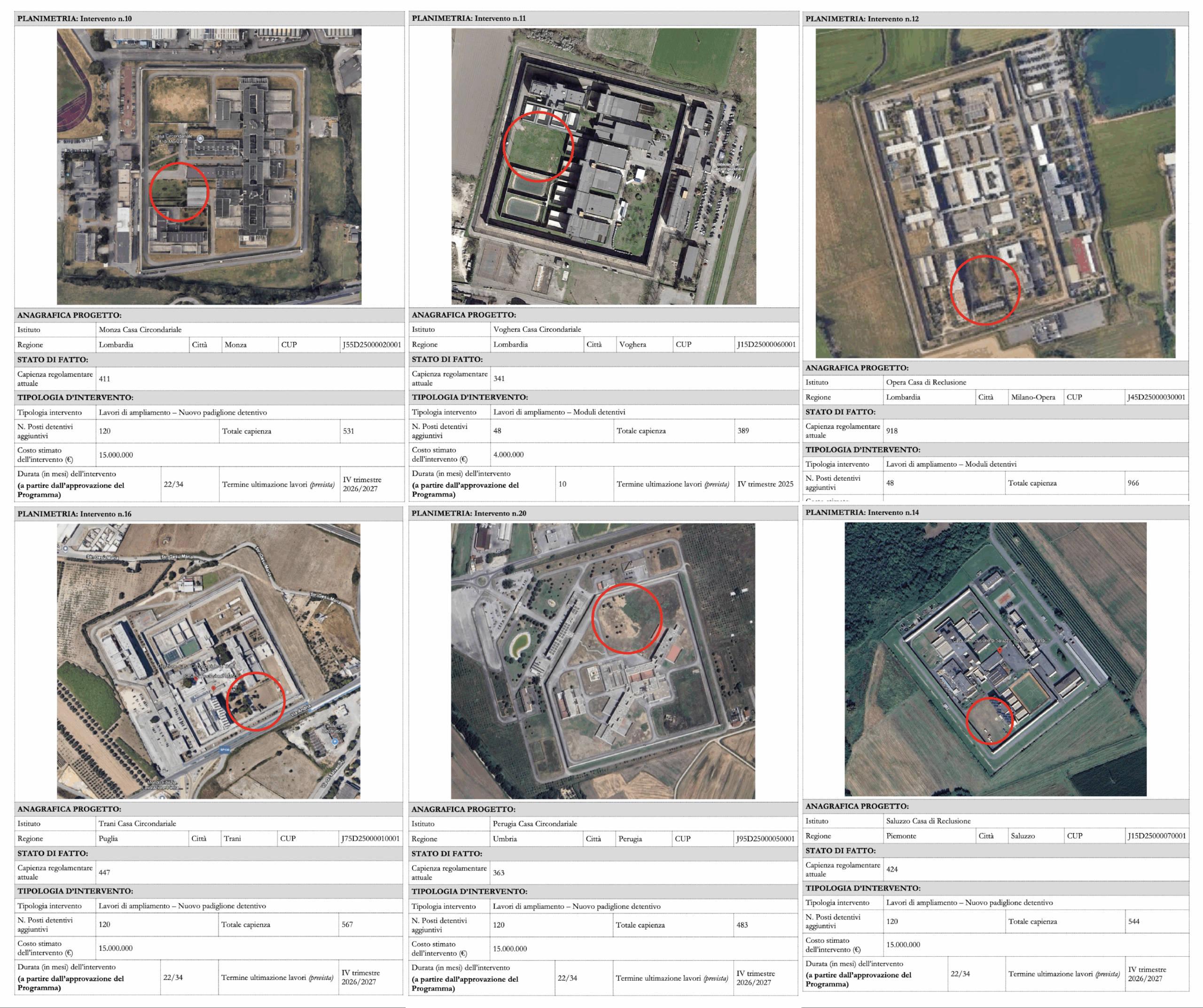
Plans for the extension of prisons, as detailed by the Extraordinary Commissioner for Penitentiary Buildings programme in January 2025
Commissario Straordinario per l’Edilizia Penitenziaria
In 2024, Meloni approved the construction of another centre for migrant detention in Gjadër, Albania — the first to be built outside the territory of the European Union by a member state. The architecture of the centre, both a CPR and a CTRA, reproduces the container logic of Gradisca d’Isonzo. Now completed and fully operational, the facility has already been the site of numerous critical events: recently disclosed documents revealed multiple suicide attempts and acts of self-harm among detainees. Prisoners there experience conditions typical of Italian detention detention: no phones, no parcels and rare communications with legal teams. Through a 65 million euro investment, Meloni made clear that the government’s priority is not to improve the conditions of life in detention, nor to tackle the prison emergency in the present, but to further reproduce these issues across new projects and new spaces. This comes as no surprise, given the ever-rising number of new offences introduced by her government’s securitarian laws.
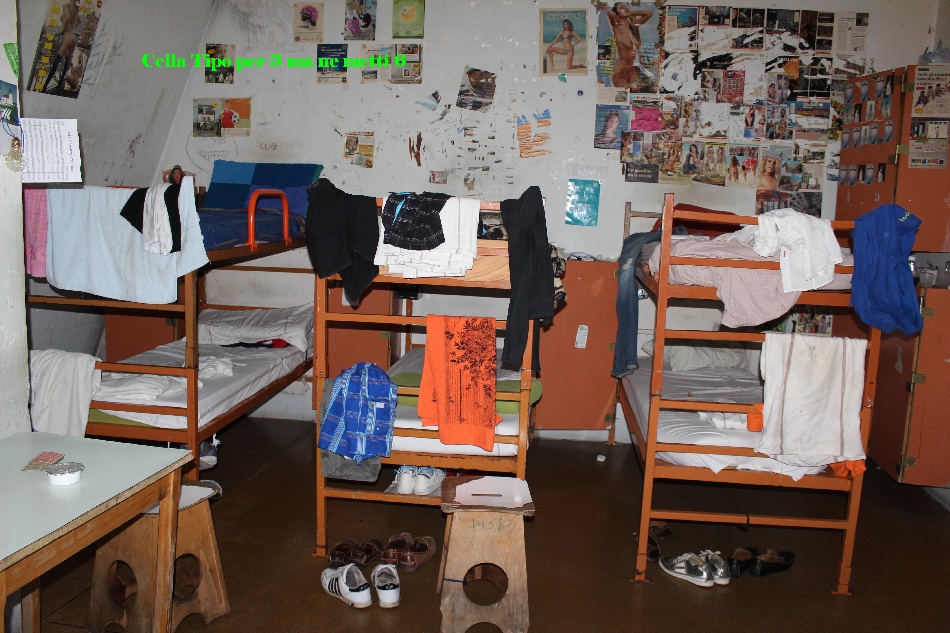
A cellroom in the male section of the prison of Sollicciano (Florence), taken during a July 2013 visit by the UILPA (a union of penitentiary police officers). The caption reads: “A cell meant for three people, but you put six in it.”
UILPA
No law exemplifies the quest to enlarge the prison population better than the latest law, the infamous Decreto Sicurezza, which was signed in June 2025. After the Decreto Caivano harshened criminal punishments for minors and thus worsened overcrowding in juvenile prisons, the Decreto Sicurezza introduced new criminal offences and several aggravating circumstances. It includes measures against squatting and panhandling, and protects police officers from liability, strengthening their power within and outside detention spaces. But above all, the decree heavily targets the rights of protesters and political activists, criminalising the blockade of transport infrastructures such as roads or ports — even those held peacefully. The effects of this securitarian tightening were quick to appear: tens of activists have been recently cited for blocking railways and motorways during the mass protests against the genocide in Gaza in early October 2025. If charged, they will end up detained, facing penalties of up to six years in prison. These new decrees build on the repressive use of criminal law in Italy across different domains of state governance, as seen with Maysoon’s incarceration.
While the aim of the law is to discourage political dissent or opposition at large and in its multiple forms, the Decreto also increases the possibility of being locked up, or prolonging the time spent in jail. More criminalisation means more people locked up and more overcrowding, which in turn entails the further worsening of prison conditions. One of Italy’s most vicious articles introduces yet another criminal offence, ‘riot inside prison or migrant detention centre,’ which also includes participation in any kind of protest as well as passive resistance to orders, and can lead to additional imprisonment for up to ten years. This creates a cycle in which any opposition against the dire conditions of incarceration, whether in a criminal facility or within a CPR, can lead to years of extra time within those very same conditions. As such, the state punishes resistance to prison with more prison, in a ceaseless effort to curb any potential revolt inside them.
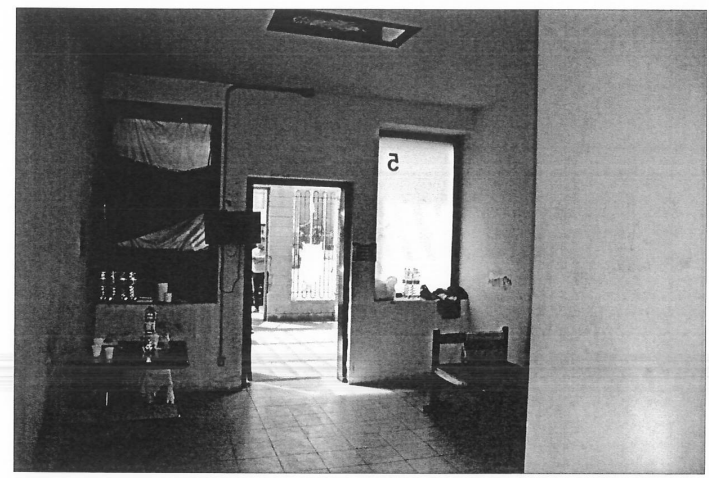
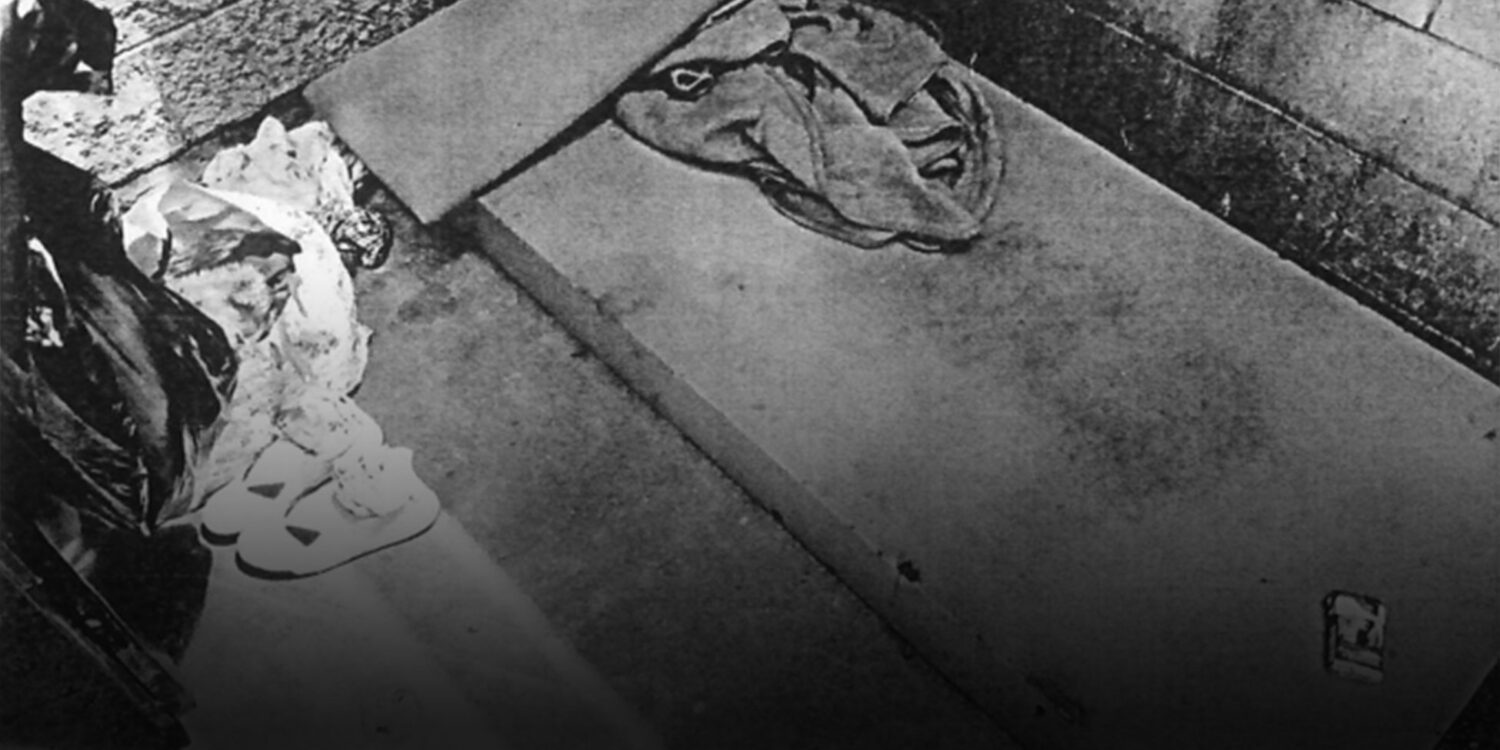
One of the sections of the CPR in Turin, Italy, taken following the death of a detainee in 2019. The case was soon archived.
Forensic Investigation Unit of the Italian Police
Debilitation targets imprisoned individuals but also performs beyond the spaces of detention, by way of punitive legislative reform against migrants, political activists, and protesters. Incarceration — or the threat thereof — is mobilised by the Italian state not only as a tool for harming migrant, racialised and poor populations and political opposition, but also to produce vulnerable subjects, who are thus made more prone to arrest. Legal conditions of vulnerability are, in turn, materially created by the very infrastructure of incarceration, through forms of purposeful disinvestment and structural neglect that make these spaces unliveable — if not outright hostile to life.
The line between the Italian criminal prison complex and the migrant detention system has blurred. Within criminal prisons and migration centres alike, debilitation is not just the outcome, but actually the very condition for incarceration. By cracking down on dissent, migration and minor criminal offences through securitarian laws, the far-right government of Giorgia Meloni is ensuring that more people will be locked up all across Italy (and now, across Albania too). This signals a project of biopolitical control. Rather than constituting an accidental form of mismanagement, the political project of intentional debilitation that spans across the Italian detention system is one where the state actively produces vulnerable populations. From Castrovillari to Turin, Italian detention infrastructures are working exactly as intended.