This article is part of the FA special series Everywhere Walls, Borders, Prisons.
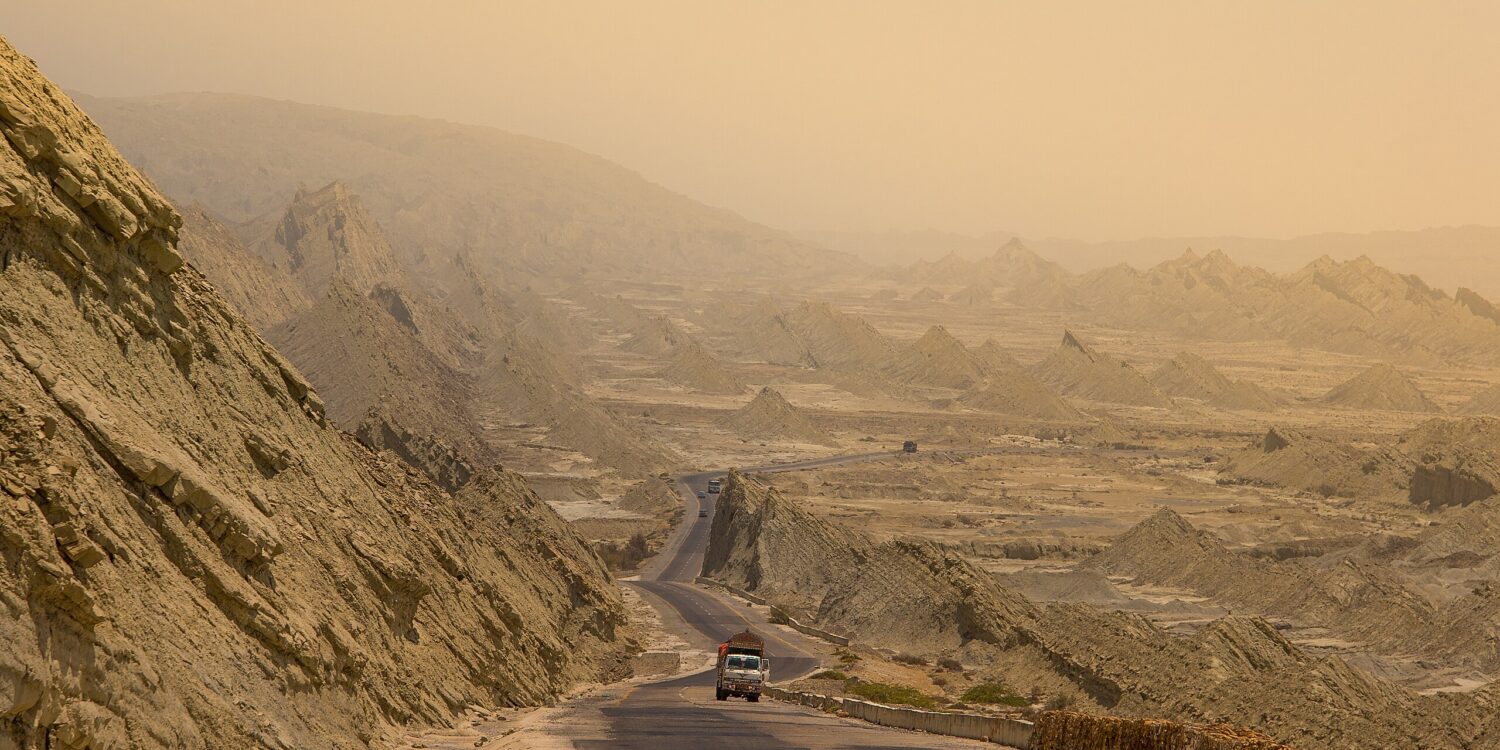
The city of Quetta is functionally a garrison. Situated on the borderlands of competing geopolitical interests, the capital was largely constructed to serve as a military base for the British Army after the First Anglo-Afghan War. Since the Partition of British India, the Pakistani Army has used major infrastructural development as a tool for colonial domination in the city. Samungli Road, a state arterial highway, was built in the 1970s to allow high-speed transit between the Pakistan Air Force Base, Quetta International Airport, Quetta Central Jail, and the city’s administrative centre. The army routinely deploys its kill-and-dump practice along the road, the latest victims being two teenagers who were abducted in transit by intelligence forces and found dead this past March. The occupation seeks to exploit the region for its lucrative geopolitical location and apparent abundance of rare minerals and fossil fuels, without any regard for the Indigenous population, beyond efforts to erase them. In turn, Baloch resistance focuses on strategically disrupting the colonial infrastructure Pakistan uses to occupy, extract, and control Baloch land and bodies. Through acts of spatial sabotage, both militant and protest-based, Baloch people are not just protesting injustice but are actively re-appropriating and redefining the very geography of their homeland, carving out zones of defiance against the state’s cartographic and political control.
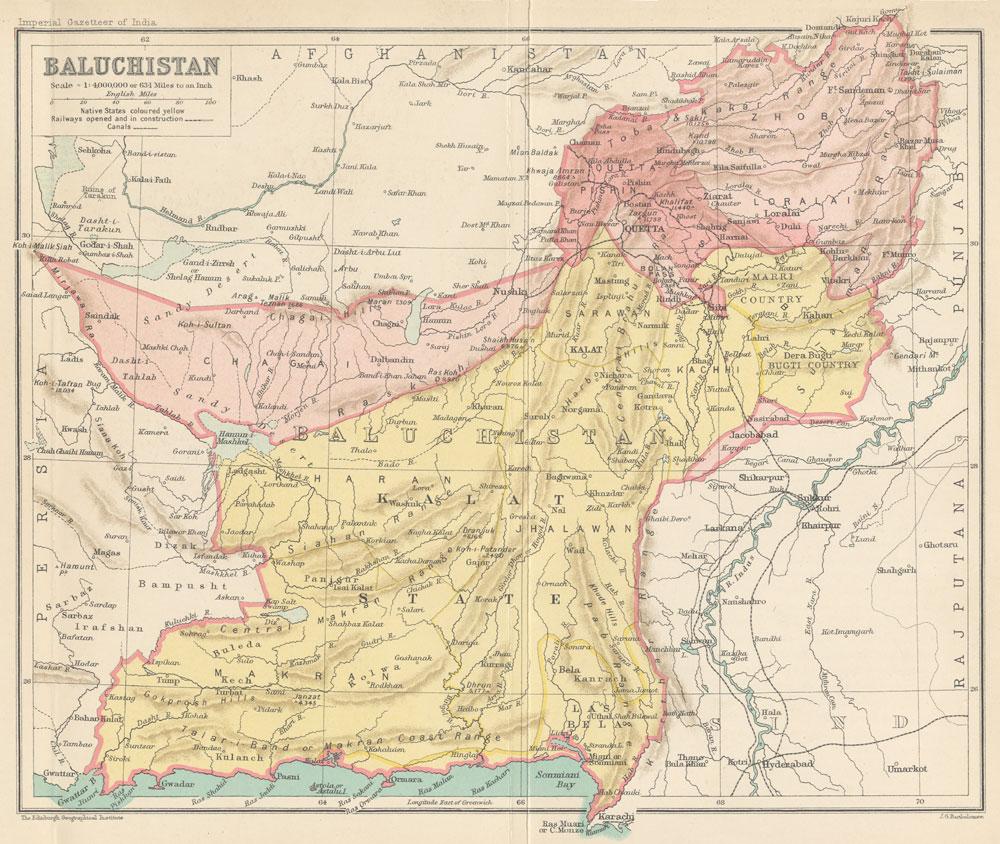
Map of Baluchistan, 1908
Imperial Gazetteer of India
Traditionally, the Baloch live in small villages enshrined with a complex and longstanding tribal system of governance. These villages operate on a small independent network of roads suited for low-level traffic, pedestrians, and livestock. Leaders, known as sardars, were originally elected, and land ownership functioned on a multi-year cycle which saw land redistributed amongst the tribe to ensure equality in labour and harvest. Baloch livelihood relied on pastoral shepherding of livestock, seasonal agriculture, and fishing. Mining, drilling, and geological extraction were the primary economic interests pursued by Britain, and now, Pakistan. In the decades after Partition, Pakistan exploited Balochistan to build geopolitical leverage as an authoritarian, militarized state. From toxic uranium mining to nuclear testing (which has adversely affected Baloch communities for generations), the skeleton of Pakistan’s occupation has been organized through an infrastructural network of extraction and control.
Highways, pipelines, and ports each represent an economic driver of Pakistan’s occupation that doubles as a tool of Indigenous dispossession, transforming Balochistan into a material apparatus for statecraft. Infrastructural projects for resource extraction, such as pipelines, gas fields, quarries, and mines, with their aggressive geological footprints, deeply disrupt local ecosystems and Baloch patterns of settlement. The Pakistani Army takes the construction of highways and ports as an opportunity to demolish villages, seize Balochi land, and ethnically cleanse the region. Once built, national highways serve two purposes: first, to allow for province-wide military patrol and presence, and second, to serve as a key link in the China-Pakistan Economic Corridor (CPEC), connecting inland China to the Arabian Sea. Since the 2000s, Pakistan and China have begun developing a scheme to establish an international tax-exempt commercial port at Gwadar. To prepare the site for development, the Pakistani state seized thousands of acres of land from Baloch tribes with a vague promise of payment in the future. The displaced fishermen who refused to leave were arrested or killed by the Pakistani army.
Since the 19th century, the Baloch have engaged in anti-colonial action against occupying forces. There have been five organized armed insurgencies since Pakistan’s illegal annexation of Balochistan in 1948, one currently ongoing. Militant resistance groups such as the Baloch Liberation Army (BLA) have routinely exercised a spatial strategy of sabotage in order to undermine the colonial network of infrastructure. However, a significant shift has occurred in the Baloch liberation movement. Until the 21st century, tribal leaders and land-owning Baloch were at the forefront of armed action against the Pakistani state. The majority of Baloch society lacked the educational resources to engage in political action. Over the last 20 years, despite a continued lack of resources, the literacy rate in Balochistan has grown, expanding the middle class along with it. Young Balochis, especially women, are engaging in political action and protest as a new frontier of insurgency. Rather than employing the “spatial sabotage” of the armed resistance, this nascent movement uses “spatial disruption” to undermine the colonial network. Although many young Baloch activists credit armed struggle for all historical progress on Baloch rights, recent street protests have proven increasingly effective in garnering national and international support.
Over the last twenty years, there have been more than twenty thousand Balochis abducted by Pakistan state forces along national highways. Many are never found again, and those that are found are often executed and dumped on the side of those highways. This army practice has become so common that Baloch tribal elders and search groups organize routine patrols of highways looking for bodies of their missing. In resistance to the Pakistani army’s kill-and-dump practice, guerrilla violence has been enacted across Balochistan’s key national highways. On Samungli Road, BLA members plant bombs to target Punjabi soldiers and government workers. Over the last ten years, the BLA has targeted buses, trucks, and commercial vehicles travelling along national highways into Balochistan and killed all Punjabi-born nationals or army personnel upon identification. With more than ninety percent of Pakistani military posts being filled by Punjabi Pakistanis and the majority of resources being exported to Punjab, the BLA targets Punjabis and highways connecting to Punjab to expose the colonial structure of the nation. These attacks disrupt the colonial network of resource extraction, reasserting the atmosphere of fear onto the settler.
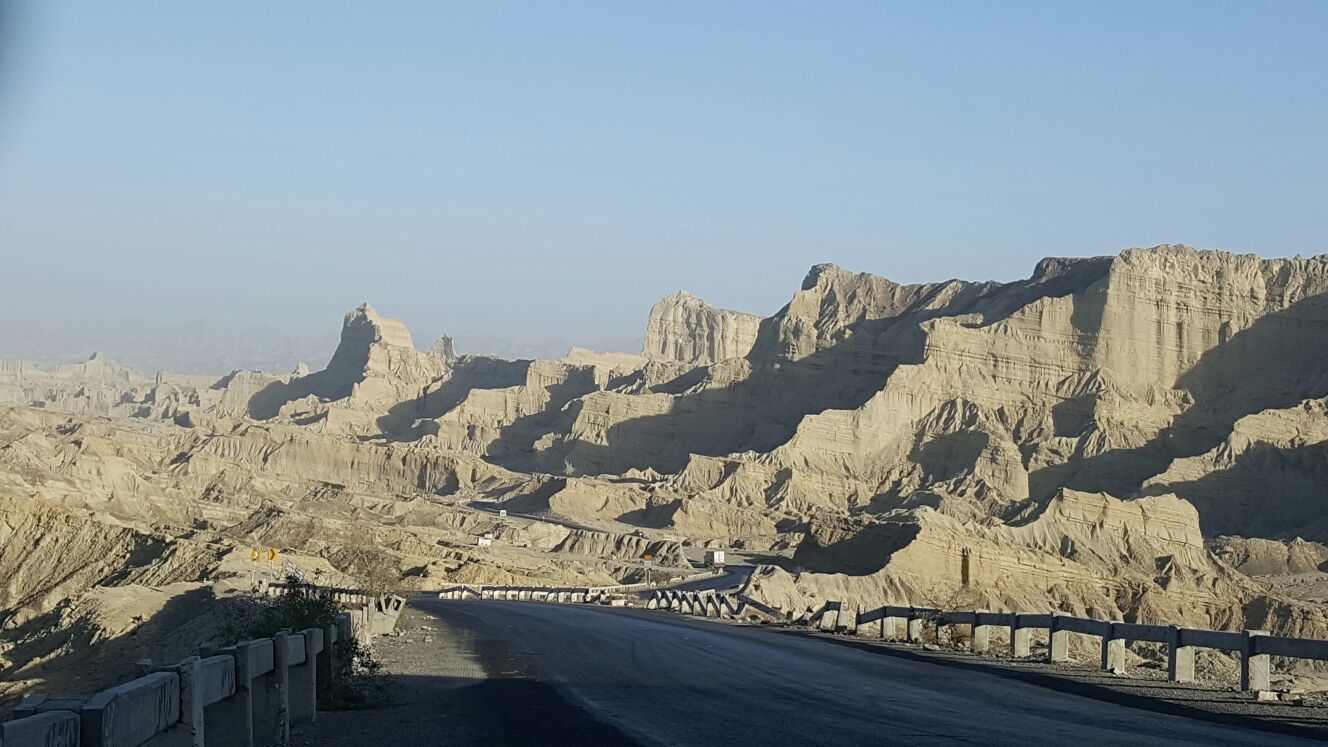
Coastal highway near Gwadar, 2017
Bilal Khan
In conjunction with the BLA’s militant actions, movements such as the Baloch Solidarity Committee’s (BYC) “Baloch Long March” or “March Against Baloch Genocide” have equally disrupted and reclaimed the colonial highway network. In 2023, hundreds of Balochi women who had lost their husbands, brothers, and fathers through enforced disappearances, walked 1,600 kilometers from Turbat to Islamabad along the national highway to confront the government on their human rights violations in Balochistan. They camped along the highway, which resulted in nationwide blockades along key trade routes. When they reached the capital, authorities used violent force to prevent them from occupying any public space, resulting in serious injuries and hundreds of arrests.
When the Pakistani state established the Sui Gas Field in the 1950s, it provided the country with a stable supply of natural gas to heat homes, power stoves, and fuel vehicles. The site became so vital to resource accessibility in Pakistan that “sui gas” became synonymous with Pakistanis’ understanding of natural gas. While “sui gas” profoundly changed the country, it was more than three decades later that Balochistan, and the town of Sui, where the resource was extracted from, gained access to natural gas. As Pakistan’s largest natural gas deposit, Sui represents the relationship between resource extraction and Baloch subjugation that is at the foundation of Pakistani statehood. The third Baloch insurgency began in response to the establishment of Sui Gas Field in 1959. Sher Muhammad Bijrani Marri, a local tribal leader, led like-minded militants into guerilla warfare, intending to force the government of Pakistan to share revenue from the gas fields with tribal leaders. Frustration with this exploitative system of extraction has manifested in more than two hundred coordinated attacks on gas pipelines in Balochistan from 2005 to 2018. Last winter, the BLA coordinated a debilitating explosion at a main gas line owned by Southern Sui Gas Company (SSGC), cutting off gas supply to major cities such as Quetta and Gwadar. The attack was intended to disrupt construction of the Gwadar Port and to undermine the economic value of the infrastructural project.
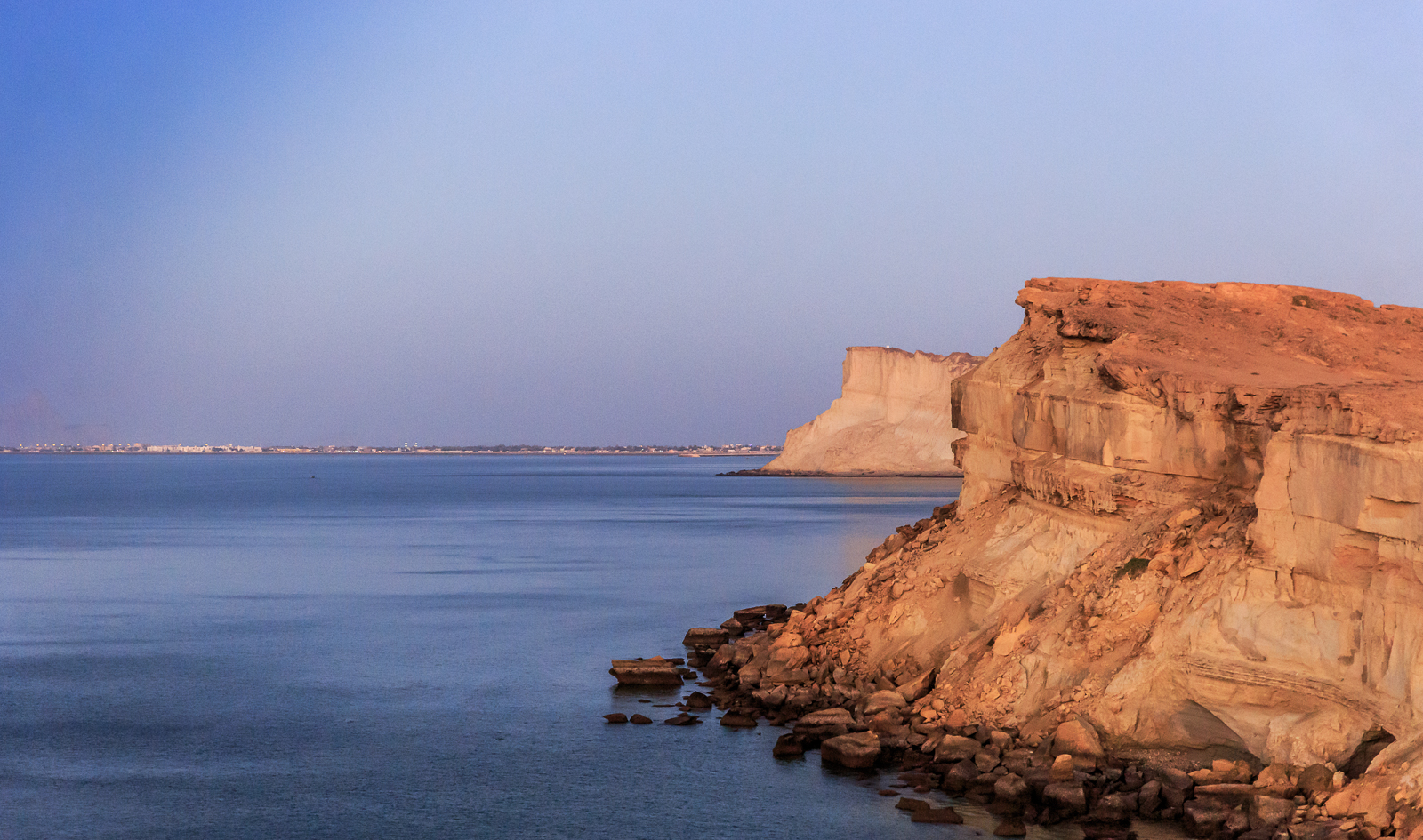
Gwadar, 2016
Ghulam Murtaza
Last year, the BYC organized a sit-in at Gwadar known as the “Baloch National Gathering,” inviting indigenous Balochis from all affiliations to protest the abductions, extrajudicial killings, and unlawful seizure of land committed by the Pakistani army in execution of the infrastructural project. The army issued a curfew and blocked all roads leading to the port in efforts to stop the protest. As Balochis began entering the city, the Pakistani army arrested and opened fire on hundreds of protestors. This aggressive military approach transformed Gwadar into a site of regular conflict between Baloch liberation fighters and the military. Armed resistance, sit-ins, and marches organized by the displaced inhabitants of Gwadar have been able to disrupt construction in a sustained way. Disapproval from China and investment hesitancy from Gulf countries such as the UAE and Saudi Arabia in response to Baloch resistance has Pakistan deepening its military presence in Gwadar. The fight for Balochistan’s liberation crystallizes at Gwadar Port. Pakistan’s economic and political objectives expose their roots in the ethnic cleansing and dispossession of Balochis. The consistency of imperialism, whether American or Chinese, reveals itself in the methodical destruction of landscapes for access to capital. Most importantly, it becomes evident that the liberation movement needs both an armed and a non-violent resistance, working in solidarity to disassemble the colonial state.
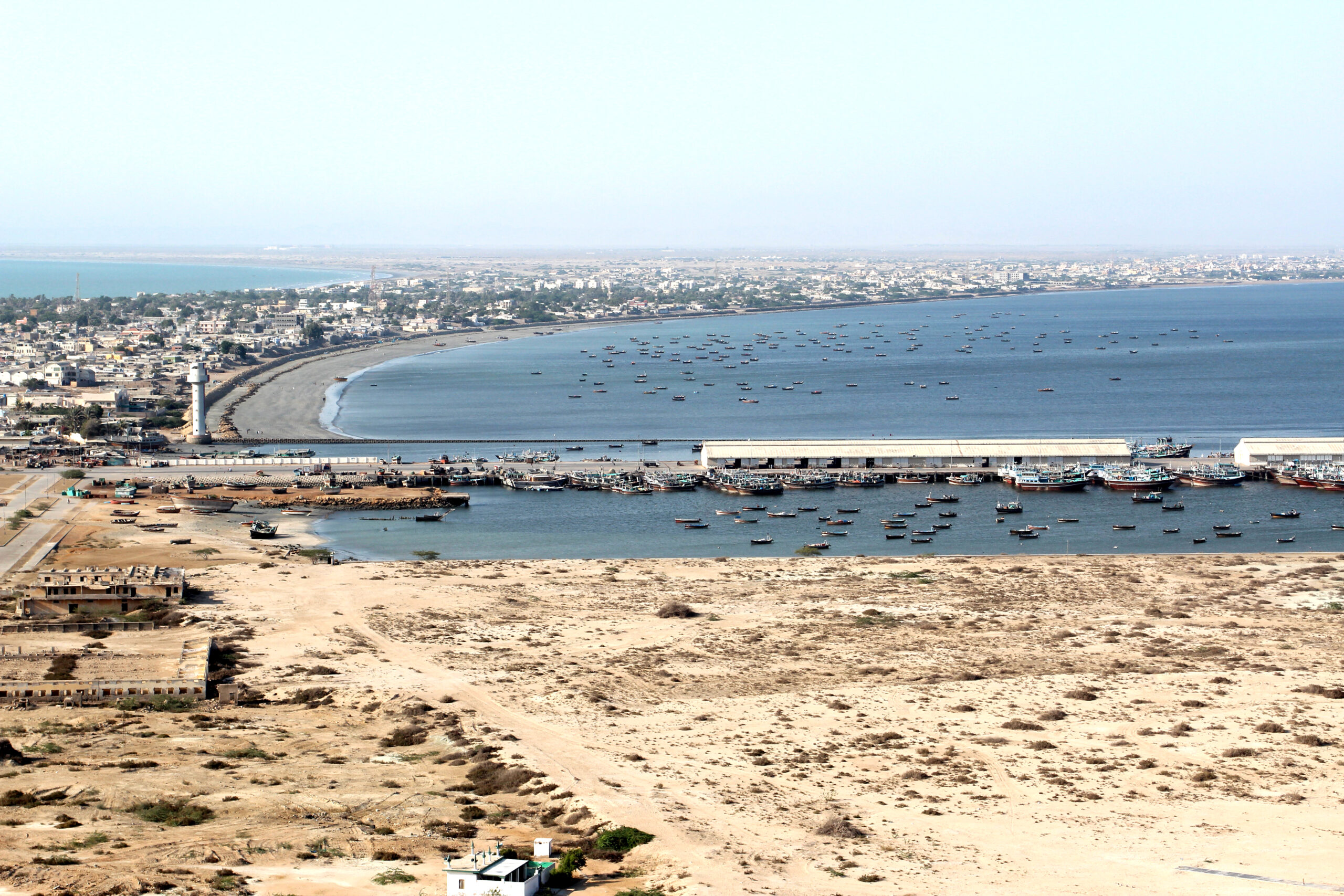
Gwadar Fishing Port, 2015
Rajab Slote
Balochistan’s struggle has provided a framework of spatial resistance for a broader movement against extractive colonialism. Moreover, the fight against exploitative development projects in Gwadar has drawn attention to the environmental degradation caused by military-backed industrialization, strengthening opposition to similar projects across Pakistan. In Gilgit Baltistan, Sindh, and Khyber Pakhtunkhwa, Indigenous communities resisting forced displacement, land dispossession, and resource extraction have drawn from Baloch strategies of spatial resistance, from blocking roads to disrupting development projects. Student movements in Pakistan’s universities, such as the Pashtun Tahafuz Movement (PTM) and Sindhi nationalist groups, have found common cause with Baloch activists, framing their struggles as part of a larger fight for regional autonomy and self-determination. This has fueled growing calls for environmental sovereignty, forcing Pakistan’s elite to contend with the long-term consequences of unchecked resource extraction. Through these acts of defiance, Balochistan has become more than just a site of resistance—it has become a model for confronting state authoritarianism and colonial legacies in Pakistan and all of South Asia beyond.