By the time I began writing this article, Europe was once again in the middle of an extraordinary heatwave right at the start of summer. Newspapers reported temperatures surpassing 40°C, red weather alerts, school closures, transport disruptions, and mounting public health concerns. According to the World Weather Attribution initiative, this was the second exceptional heatwave to strike Europe in 2026 within a matter of weeks, with temperatures in parts of France, Germany, Italy, Spain, and southern England reaching between 5 and 12°C above the averages.
The researchers also cautioned that many European cities, buildings, transport systems, and energy infrastructures were never designed to cope with prolonged periods of extreme heat. All over Europe, public health authorities advised people to stay indoors, avoid physical activity, and drink plenty of water. Climate change was, of course, to blame, a diagnosis so familiar by now that it risks sounding like a platitude, even as Europe burns, dries, and overheats every summer. Still, as Ajit Niranjan, The Guardian Europe environment correspondent, asked in a feature article published at the height of the heatwave, the pressing question is no longer whether Europe will continue to get warmer, but why, after decades of scientific warnings, it remains so unprepared for the rising temperatures.
In the Netherlands, as a bit of rainfall failed to replenish the Rhine and Meuse after the heatwave, Dutch authorities warned of an impending freshwater shortage. Water levels continued to fall, salinization increased in the western provinces, blue-green algae became more common, there were reports of dead fish in different areas of the country, and regional water authorities began activating pumping stations, restricting water extraction, and implementing measures to protect water quality. While much of Europe talked about the heat, Dutch institutions were focusing on water.
Geographer Neil Smith argued that “there’s no such thing as a natural disaster.” His point wasn’t that earthquakes, hurricanes, or droughts are not part of natural cycles, but that disasters happen from the social, political, and infrastructural conditions that shape vulnerability. They are just as much the outcome of planning, governance, and inequality as they are of meteorological or geological events.
Reading Smith in the middle of another European summer of record-hot temperatures made me wonder whether the same could be said of thirst, especially because the threat of extreme weather is ultimately felt in one’s individual body. Physiologically, thirst is the body’s mechanism for keeping its water balance. It is the sensation that arises when our bodies detect that water has become scarce, prompting us to drink before dehydration kicks in. In that sense, thirst is not simply the lack of water but a signal that the body’s equilibrium has been disturbed. Therefore, thirst can open up ways of reading imbalances in humans and non-human bodies as well as rivers, agricultural fields, cities, infrastructures, and landscapes.
In the Netherlands, this question cannot be put aside from the design of its polder landscapes. Water here does not just flow following natural cycles; in the Dutch lowlands, water is pumped, drained, diverted, stored, discharged, and allocated by a landscape constructed over centuries of labor and engineering. The infrastructures that made large parts of the country inhabitable were primarily designed to protect the dry land from the whims of the excess of water. Dikes separated land from rivers and seas, while canals, drainage systems, and pumping stations moved water away from polders as quickly as possible. In this hydraulic model, safety meant keeping the land dry.
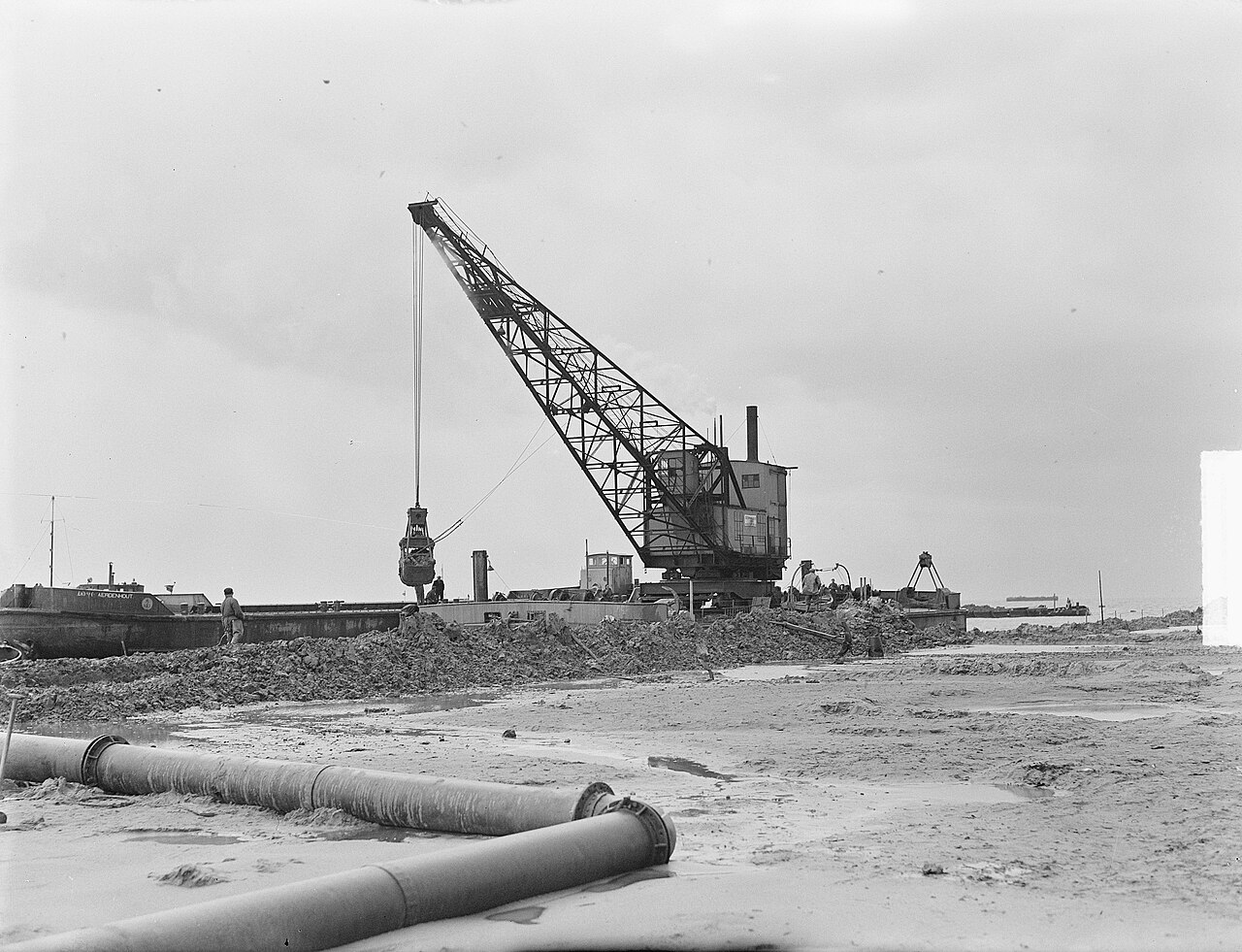
Construction of a dike in the Zuiderzee for the Zuidoostpolder, 14 November 1950.
Harry Pot / Anefo, Nationaal Archief. CC0.
The country’s thirsty human and non-human bodies cannot be explained by climate change alone. It also reflects centuries of decisions about drainage, agricultural production, groundwater management, drinking water extraction, and flood protection. Groundwater has long been kept artificially low to maximize agriculture, while large quantities of freshwater are still discharged to the sea during rain seasons. At the same time, pollution from fertilizers, pesticides, and industrial contaminants has reduced the quality of both surface and groundwater, making much of the available water increasingly difficult and expensive to use as drinking water. During periods of scarcity, Dutch law even prioritizes maintaining dike safety and preventing peat subsidence over many other uses of freshwater.
Today, however, this hydraulic model is being contested; the hydrological regime of the planet has changed. The Delta Programme —the national long-term strategy for flood protection, freshwater availability, and climate adaptation— argues that the Netherlands can no longer rely on optimizing its existing water system. Longer dry seasons, less river discharges, salinization, bigger water demand, and deteriorating water quality will require a fundamental transition in the way the country approaches spatial planning and water management. This change in the planning strategies indicates a change in the paradigm of Dutch water management.
In an exchange with Waternet—the public water organization for Amsterdam and the surrounding area—water expert Wilko Koning and I discussed water availability in Amsterdam. He described several projects currently being developed to secure the city’s water supply: expanding sand filtration capacity, experimenting with brackish seepage water from the Horstermeerpolder, and exploring whether treated wastewater could be used by the industry, freeing water for drinking. Taken together, these projects show how Waternet is trying to stretch Amsterdam’s freshwater supply: increasing how much drinking water it can produce, investigating potential new sources, and reserving drinking-quality water for uses that actually require it. Basically, more moves and plans to adapt to the dry seasons.
The Delta Programme is, in many ways, reading a crystal ball or more plainly, an exercise in anticipation. Looking decades ahead, it models possible watery futures for sea-level rise, freshwater availability, and climatic uncertainty in order to guide today’s spatial planning. Like a weather forecast, it does not predict a single future, but it does create scenarios where uncertainty can be anticipated. In doing so, it extends a long Dutch tradition of using infrastructure not only to protect the country from water, but also to make an uncertain future governable by means of engineering, modeling, and design.
Infrastructure therefore has a role beyond its more material function. It protects cities, farmlands, and drinking water, but it also produces a certain degree of confidence that the uncertainties of the future can be anticipated and hopefully managed, allowing us to believe that we have become less vulnerable to water’s changing moods. That confidence is now being challenged by climate change, not because forecasting has become impossible, but because the climatic conditions themselves are changing: Weather patterns are becoming less predictable, extreme events are more frequent, and historical records are less reliable as guides for the future.
Following Neil Smith’s argument, a drought alone does not explain Dutch thirst. It actually comes from the encounter between extreme weather and a landscape shaped by centuries of engineering and policy-making. The Netherlands was not designed to become thirsty, but it was designed around the assumption that the excess of water was the greatest threat to its geography, and climate change is now exposing the limitations of that assumption. Understanding thirst as something produced by a series of decisions and policies means looking both backwards, at the historical decisions that made it possible, and forward, at the climatic conditions that intensify it as well as the new forecasts and plans made to control it. But it also demands our eyes to the present.
The threat of thirst is constructed by looking into the future. Climate change arrives in the form of projections, scenarios, and forecasts of catastrophe. The language of urgency, scarcity, and collapse generates anticipation and anxiety. At least for me, these familiar doomsday narratives are deeply unsettling, and the European heatwaves made them more tangible. Still, between these forecasts of climate catastrophe and the long-term infrastructural visions of the Dutch Delta Programme, I see another space. A small margin that makes it possible to engage with the crisis in another way: not by trusting that solutions will come in the future or becoming paralyzed by the lack of certainty, but by paying attention to the practices already happening in the present, looking at the forms of care, adaptation, struggle, and labor through which people are already learning to live with it today.
To explore these questions, I spent part of the summer traveling around the Netherlands with Chef Arvid Schmidt, speaking with scientists, farmers, historians, and water practitioners. We asked them about water: What makes it capable of sustaining crops, fish, soils, and people, and what happens when it can no longer do so? Following these conversations, thirst functioned as a way of reading the fragile interdependencies that allow life to persist, as well as the intricacies of the Dutch landscape and its relationship with water management.
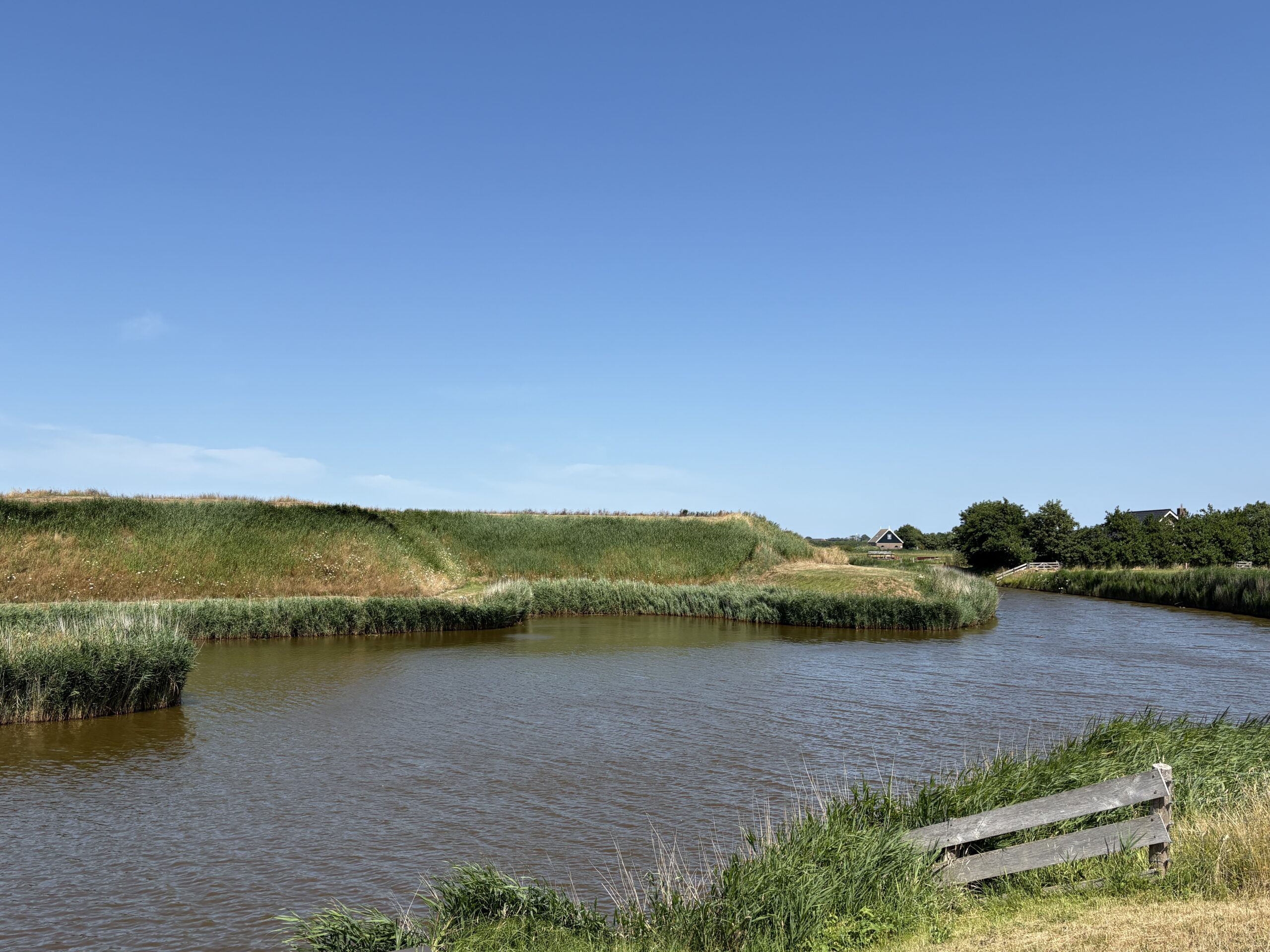
Dike in Texel.
María Mazzanti.
Our first stop was Leiden University’s Living Lab, an outdoor laboratory in the middle of the Leiden Bio Science Park, where we were welcomed by environmental scientist Henrik Barmentlo. A series of 32 small ditches were dug into the ground, located just by a bigger canal. At first, they look quite ordinary: small waterways filled with water, plants, sediment, insects, and other aquatic life, sitting in the soil and exposed to the weather. But each ditch is semi-controlled, with gates regulating the flow of water that moves in and out. In these miniature ecosystems, Henrik, together with other researchers and students from the university, tests the effects of different pesticides and chemicals in the water, focusing on one specific agent each year during the warmer months when they can work outside. Henrik described the whole setup to us as a kind of Madurodam of Dutch water and polders: a miniature landscape that reproduces some of the conditions of Dutch waterways while retaining enough control to experiment with them.
These experiments consist of deliberately polluting the water in the ditch. The researchers introduce pesticides and other chemicals into the ditches at concentrations comparable to those found in the environment and then follow what happens to the organisms living there. Each ditch houses a small aquatic world under observation. The setup of the lab occupies a space between the sterile conditions of the closed laboratory and the messiness of the world outside. In the living lab, the wind blows, rain falls, organisms move and grow in the water, leaves fall in the water, and chemicals interact with sediment, plants, temperature, and whatever else is already there. These are precisely the variables that make the lab so useful: a substance that behaves one way under the controlled laboratory conditions can sometimes behave very differently once it is released into an actual ecosystem.
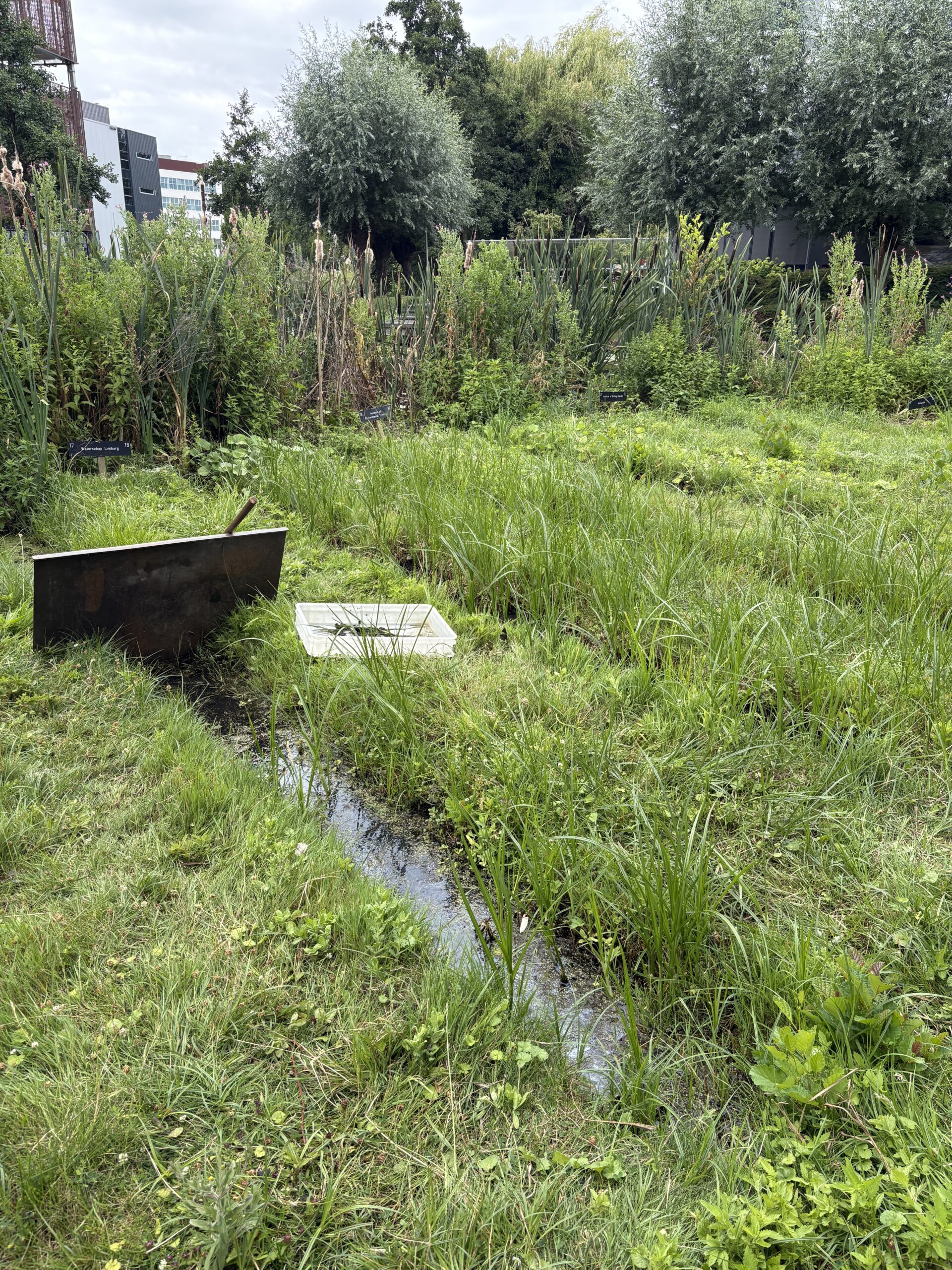
The ditches at the Leiden Living Lab.
María Mazzanti.
In another conversation with Henrik, he explained that droughts make these interactions even harder to isolate. Long periods of hot, dry weather can make the water warmer and reduce the oxygen levels, leaving organisms already under stress in a difficult condition before the pollutant being tested enters the picture. He called this “stress-on-stress”: an organism coping with heat or low oxygen may respond very differently to the same concentration of a chemical. At times, climatic conditions have become so dominant that experiments have had to be stopped. “We’re then simply measuring the impacts of climate, more than the stressor we’re interested in,” he told me.
The experiments also point to a bigger problem of water quality in the Netherlands. Despite the abundance of water and its quite sophisticated water-management infrastructure, the Netherlands struggles with the ecological quality of its surface waters. More than 90 percent of surface waters in several Dutch river-basin districts fail to attain the EU threshold for good ecological status. Aggressive, large-scale agriculture is a major part of this problem: fertilizers release the excess nitrogen and phosphorus into groundwater and surface water, while pesticides used to protect crops end up in the surrounding waterways. The small ditches at the Living Lab allow researchers to isolate some of these substances and ask what happens once they leave the agricultural field and enter the waterways.
Looking to Henrik, it was these contaminated ditches that complicated the question of thirst. The problem here was not the absence of water; there was water everywhere. The question was what kind of water it had become, and what it was still capable of sustaining. Henrik explained that organisms living in the sediment play a role in cleaning the water, giving aquatic ecosystems the capacity to regenerate themselves. But that capacity has limits. As pollutants accumulate, these processes struggle to keep pace, and the responsibility of cleaning the water moves to humans. There is a mismatch of rhythms here: an ecosystem may have the capacity to recover, but not at the fast-paced rhythms of capitalist production and consumption. The work at the Living Lab is one response to that mismatch, observing how water and the organisms living in it react to contamination and the lack of oxygen, in order to figure out how that capacity to sustain life might be protected.
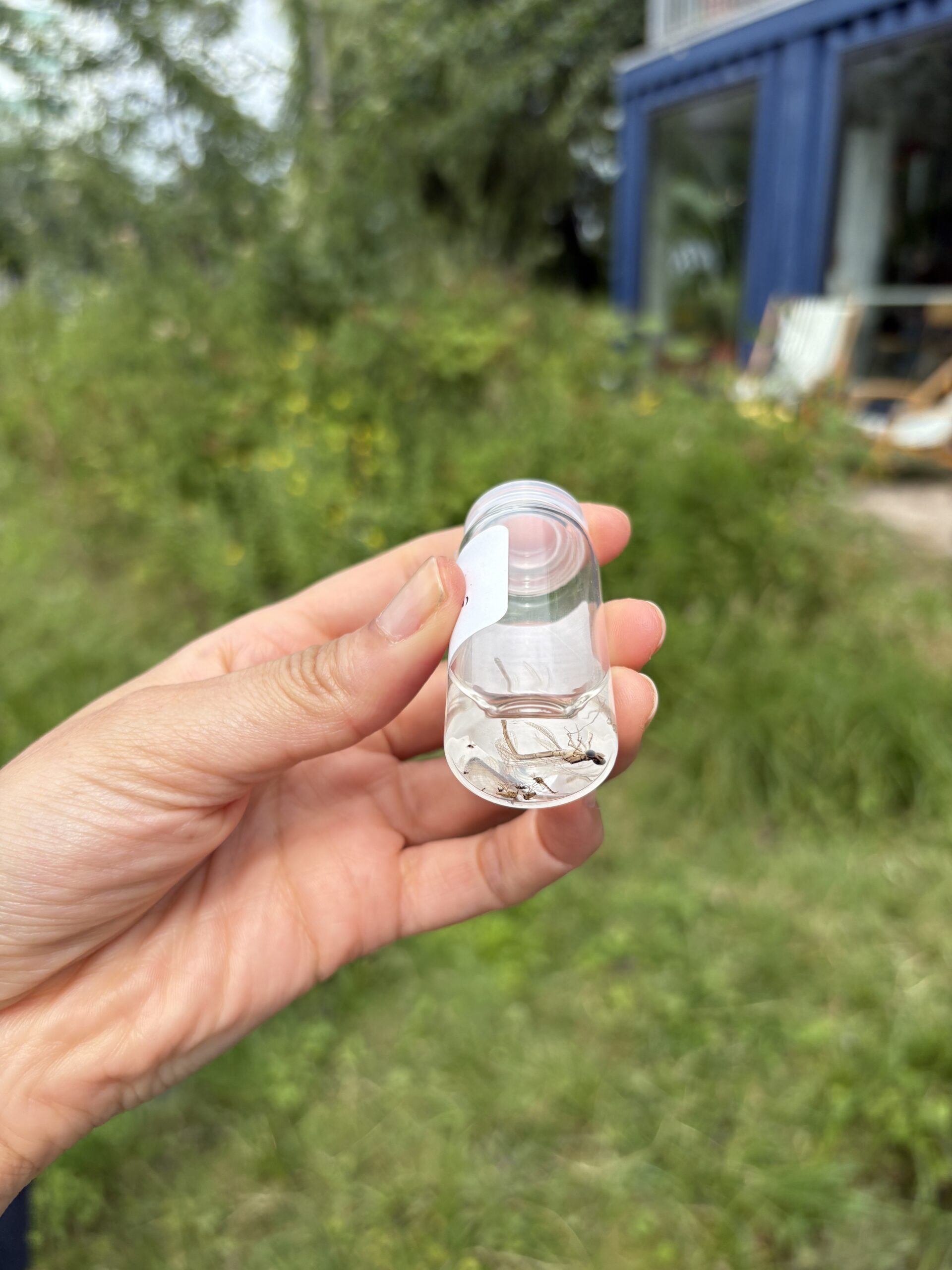
A sample of aquatic organisms collected for examination at the Living Lab, Leiden.
María Mazzanti.
Later that month we traveled to Texel —the largest and most populated island of the West Frisian Islands in the Wadden Sea— to visit Salt Farm Texel. We arrived there by bicycle on a bright summer day. The place is small and quite idyllic, housed in a schapenboet, a sheep shed with a particular architecture characteristic of the island. Nothing about this sunny scene announces the crisis that moved us to come all the way to the islands in the first place. However, when we were inside, Marc van Rijsselberghe began his presentation by talking about how little freshwater agriculture can actually rely on, how much brackish and saline water surrounds us, and what happens as salinization spreads into agricultural lands around the world.
The process of Salinization happens when salt builds up in soils, groundwater, and surface water, threatening freshwater sources and making water to feed plants more difficult to use. In coastal areas such as the Netherlands, droughts can worsen the problem: with less freshwater flowing in rivers, saltwater can enter farther inland, and the evaporation produced by the extreme heat leaves the dissolved salts behind, increasing their concentration. For agriculture, water may still be there, but plants will struggle to drink it up. Saltwater leaves both humans and plants with the same paradox: thirsty despite being surrounded by water.
Marc works around this question of salinization from a long biodynamic farming practice. He has spent decades farming somewhat against the grain of Dutch intensive forms of agriculture. He remembers biodynamic farming being treated almost as an unacceptable practice within a system geared toward high yields and intensive production, and reliant on artificial fertilizers, pesticides, and standardized seeds and crop varieties.
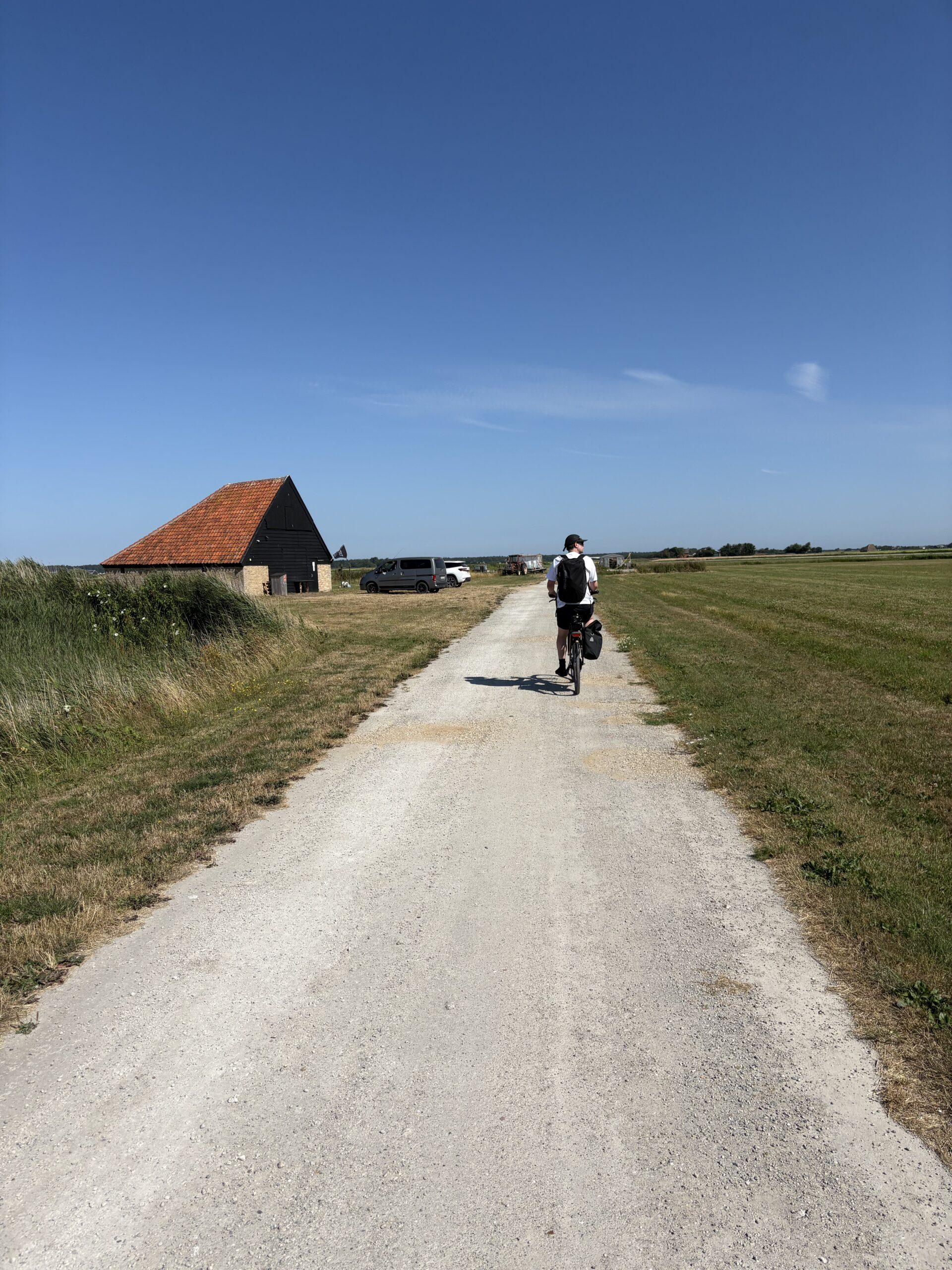
Entrance of Salt Farms Texel.
María Mazzanti.
The Salt Farm project started from these longstanding interests. Marc began testing how different crops respond to saline water, eventually building an experimental farm where plots receive different concentrations of salt in the water. For years, he joked during our visit, his job has been to kill as many plants as possible under scientific conditions, testing the limits of their own capacity to grow.
Saline water puts plants under several physiological problems. High concentrations of dissolved salts make it harder for roots to take up water, creating osmotic stress even when water is physically present in the soil. Sodium and chloride can also accumulate in plant tissues, becoming toxic and interfering with the uptake of essential nutrients. Plants have developed different ways of adaptation to these conditions. As Marc puts it more simply: “They can’t run away. So they have to defend themselves.” Since they are rooted to one place, a plant has to survive with the water that is available.
Marc and Tommy —Thomas Marcinczyk, another member of the foundation— pass around some of the produce grown at the farm. Arvid and I taste along: the carrots are unusually sweet, while the rocket has a more intense, kind of peppery flavor. We also try potatoes that taste sweeter than usual, tomatoes, together with some New Zealand spinach, oyster leaves, sea fennel, and marsh samphire. The changes in flavor happen from the biochemical processes plants use to cope with salinity. In a sense, the thirsty conditions these plants endure in Texel’s salty soil become quite literally the flavors that end up on our tongues.
As we are eating the produce, Marc points out that potatoes are a good example for understanding the various ways in which plants survive in this area. When different kinds of spuds are subjected to the same saline conditions, they do not always react in the same way; some find it difficult to adapt while others survive longer and endure the salt to produce a few tasty tubers.
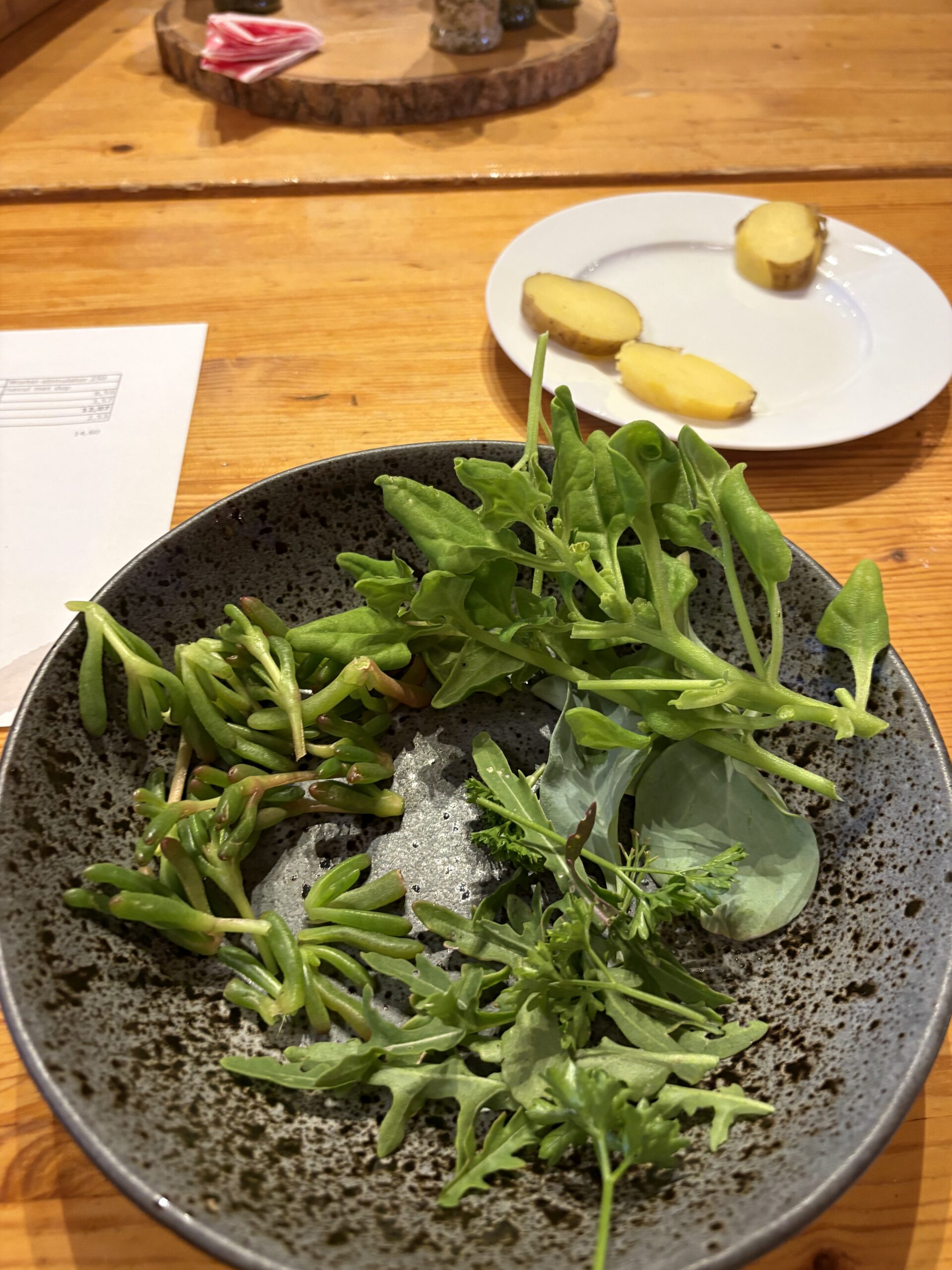
Produce from the Salt Farms.
María Mazzanti.
The potato experiments in Texel also question where agriculture traces the boundary between what water is actually usable and unusable. Salt tolerance is commonly expressed using standard thresholds; however, those figures can hide the substantial differences between individual varieties and the conditions under which they were tested. At Salt Farm, that boundary is put back into the soil, where the rain, temperature, and the plant all have a say in where that threshold actually is.
To start his presentation, Marc inquired into the small amount of fresh water that is actually available for use in agriculture; the potatoes grown on the farm make this question even more complicated. Water availability cannot be measured only by quantity: it also depends on the quality of that water and on the capacity of a particular body to use it. Nevertheless, saline agriculture is not exactly celebrating the process of salinization, rather it is considering how farming can go on in situations where fresh water cannot always be guaranteed, a scenario which is becoming more urgent for a low-lying country such as the Netherlands.
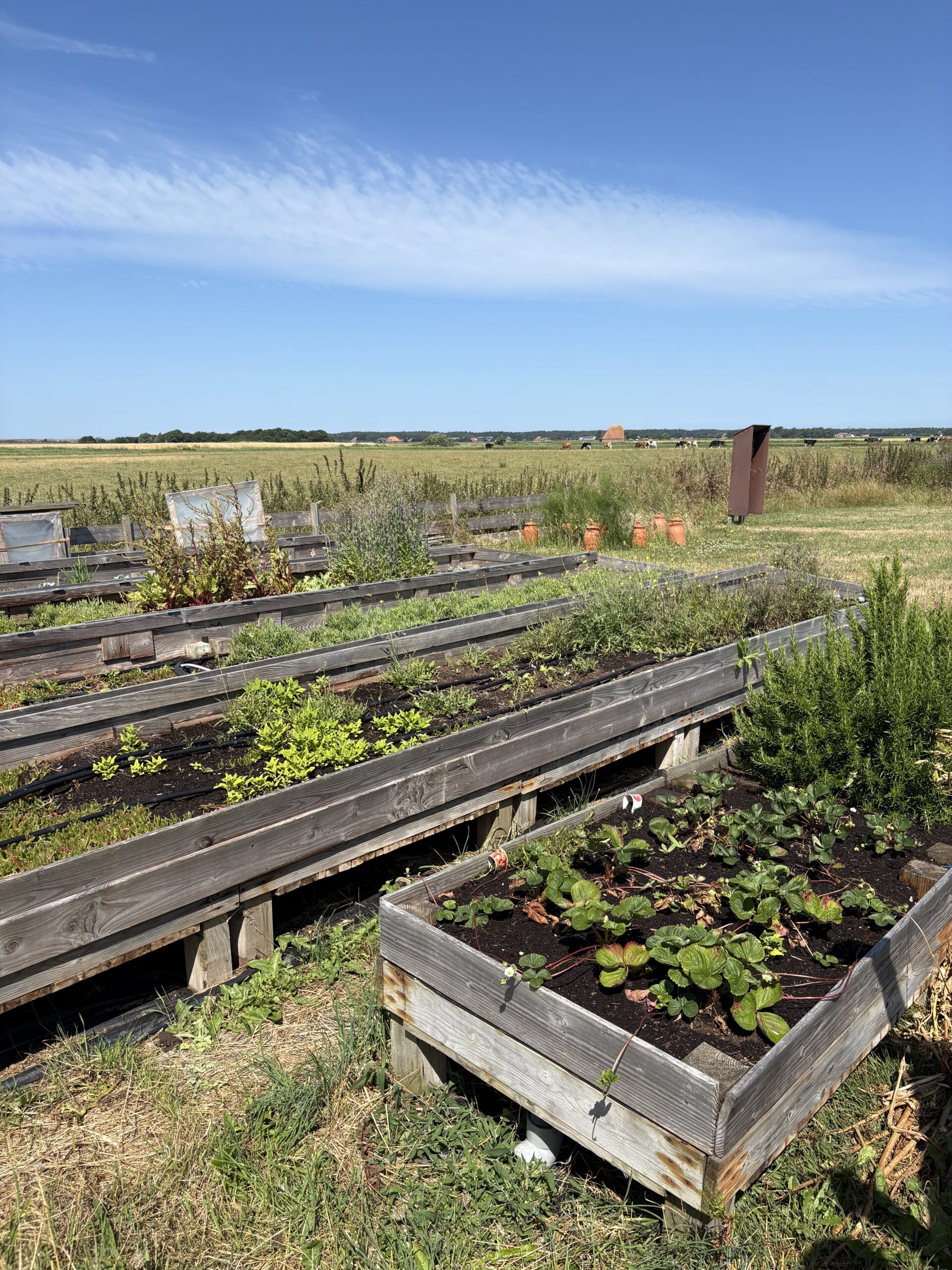
The Salt Farm.
María Mazzanti.
The fact that remained with me after having visited the farm was that practices once regarded as inadequate or marginal within the Dutch productivist agricultural system are being reconsidered as that system confronts soil degradation, nutrient pollution, reliance on fertilizers and pesticides, freshwater scarcity, and salinization.
This question followed us back into Arvid’s own practice as a chef. In a country of greenhouse-to-table and port-to-plate, his cooking leaves the kitchen always exposed to what is happening outside. He works almost exclusively with local produce grown in the soil outdoors. A dry summer, weeks of rain, too much sun or too little of it determines what is available, how much grows, and how it tastes. The season ends up always translated in his food, carrying the conditions in which the food grew, or perhaps more precisely, plating the constraints farmers dealt with that year.
From Arvid’s kitchen, this way of working together with the weather took us to Smaak Groenten in the Beemster, where we met Arthur, whom Arvid calls “the bad boy of farmers.” Arthur is also a biodynamic farmer and his farm is practically a total inversion of Dutch intensive agriculture. He rents a small piece of fertile land, works alone and, as he admits, doesn’t have much money. This lack of capital has made his relationship with the weather and the land quite raw. Irrigation costs money, it also requires infrastructure and needs more maintenance, so for the most part, he simply doesn’t do it, even in a dry summer like this one.
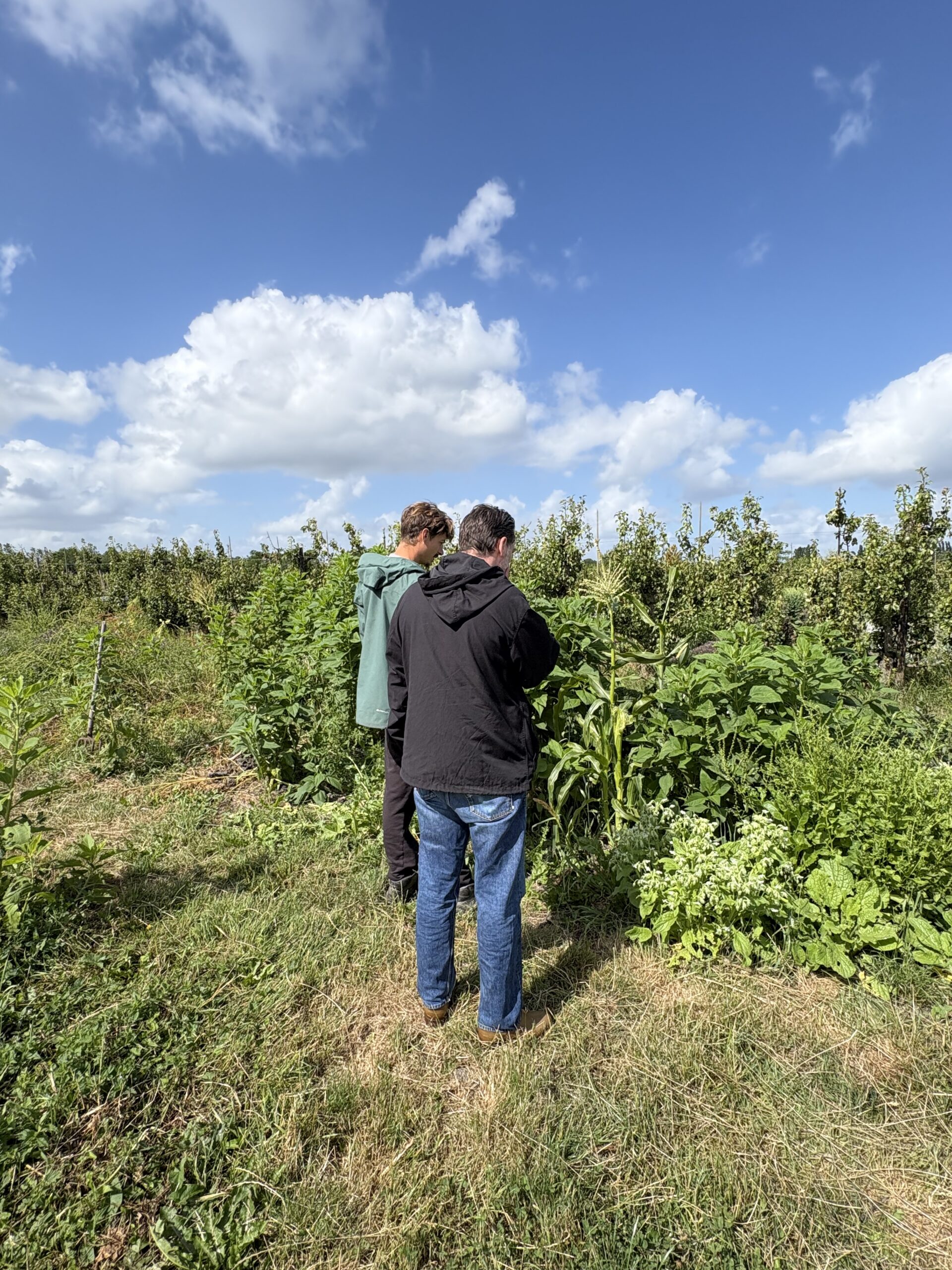
Smaak Groenten.
María Mazzanti.
During our conversation, Arthur is frequently calculating what a crop asks of him against what it gives him back: water, labor, seeds, compost, machinery, money. A greenhouse might produce more per square meter, he explained, but it also demands far more work; irrigation can keep plants growing through a drought, but brings pumps, maintenance, and costs. His calculations echo what agroecology describes as the metabolism of agriculture: the flows of energy and materials that sustain food production, including the human labor that keeps those flows moving.
In his farm, Arthur works with what survives. He plants some crops early enough to establish themselves while the soil is still wet, prepares beds during dry periods for when the rain returns, and saves seeds from plants that survive the heat and the lack of water better than others. As we walked through the field, I watched him collect some of them for the following season. He told us about watching another farmer struggle with a broken irrigation pump, red-faced and arguing with an employee, and thinking: “man, I don’t like this irrigation stuff.” His approach comes partly from conviction and partly from necessity: without the money to overcome the conditions of the Dutch weather and the field, he has learned to work with what those conditions allow. And, despite all this talk of survival and calculations, Arthur grows very good food. His vegetables are full of flavor and find their way into nice restaurants and kitchens around Amsterdam.
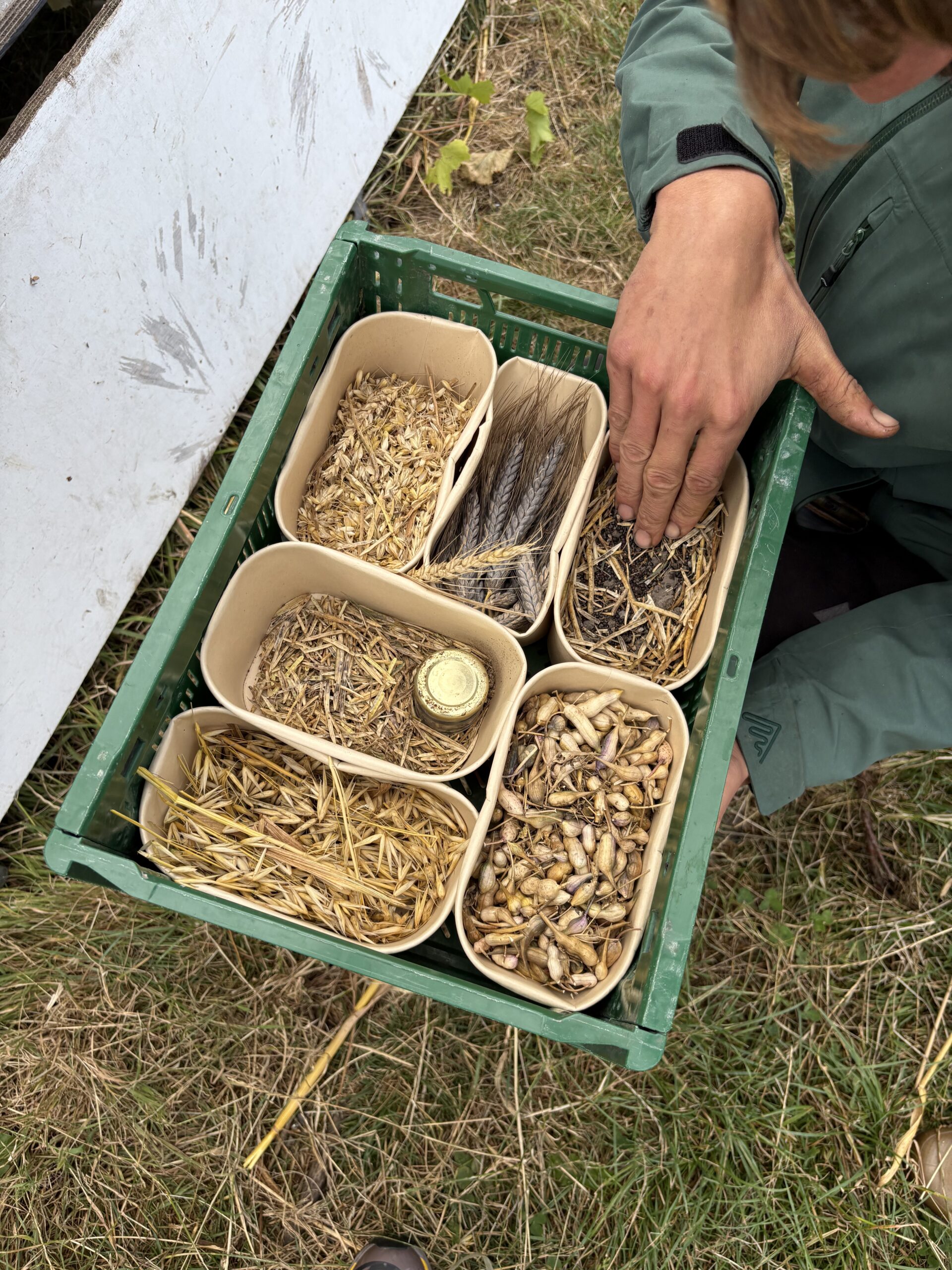
Seeds for next year’s harvest.
María Mazzanti.
Thirst, as lack of water, turned out to be quite difficult to locate as we first think of it: Scarcity. There was plenty of water in Henrik’s ditches. There was water in Texel too, including far too much of the salty kind. Even Arthur’s field was not exactly without water; he was simply unwilling, and unable, to spend the money and labor required to make more of it arrive to his plants and veggies. In the end, quantity was only part of the problem. What mattered was whether the water available could still sustain the body that depended on it, the body that felt the lack of it.
Again and again, we also encountered people working in-between boundaries. Between water and land, fresh and saline, clean and polluted, usable and unusable, controlled and uncontrolled, too much water and too little. Some were quite literal, the concentration of salt after which a potato stops producing anything worth harvesting, or the amount of a pesticide an aquatic ecosystem can absorb and recover from. But these lines turned out to be not so well fixed. Change the potato variety and the salt threshold moves despite whatever the numbers say. Henrik works between the controlled conditions of the laboratory and the messiness of an actual ecosystem. How much pollution can the water take and still recover? What happens when heat and low oxygen are added to the mix? At what point does the experiment itself stop working? Boundaries keep moving.
This is relevant in a country that has become extraordinarily good at turning water into numbers: levels to maintain, concentrations to monitor, thresholds to respect, scenarios extending towards 2050 or 2100. We need those numbers. The difficulty is that climate change is also changing some of the conditions under which those numbers have any meaning. The lines are still useful, but we may need to keep redrawing them.
The people we met weren’t waiting for those lines to be defined again. Marc has spent years trying to kill plants to find out which ones stay alive. Henrik took his experiments outside mainly because the world is messier there. Arthur saves the seeds from the plants that survived the summer. Arvid cooked what the seasons produce.
When I started this article, the Netherlands was moving towards a water shortage. By the time I was finishing it, it was raining, and Rijkswaterstaat had announced that there was no longer a national water shortage, although they mentioned the effects of the drought would take longer to disappear. Now I find myself walking around the Amsterdamse Waterleidingduinen, where water destined for Amsterdam’s taps seeps into the dunes and is filtered by the sand.
None of the people I met had the last word. Science doesn’t have one either. It gives us methods of understanding what is happening, measuring it, modeling what might come next. But there is no finished set of instructions waiting to be handed down for how to inhabit a climate that is changing while we are already living in it, being in it.
So maybe the small margin I was looking for at the beginning of this is actually here: in going out and trying things, observing things. For example, digging a ditch, planting seven rows of potatoes, keeping some seeds, cooking what actually grew that year, and observing those practices with greater attentiveness. I want to stop at that gesture: observation, as a way of directing our attention, not in a passive sense or as a way not to live with the urgency of the climate emergency, but more as a call to turn our heads towards other forms of knowledge production. We already know enough to realise how serious the situation is. Forecasting cannot be the only place where agency resides. We can also look at what people are already learning by acting within these unsettling, changing conditions, and give those practices room in the larger story. Observation thus also comes with the possibility of amplification, as a practice of giving space to other voices, maybe the ones beyond the techno-optimistic solutions and counter to the bleak predictions of thirsty humans and wildfires without any agency in their present and future.
This article was made possible by the EFL Foundation.