FAILED ARCHITECTURE
link
EXCAVATING THE FUTURE


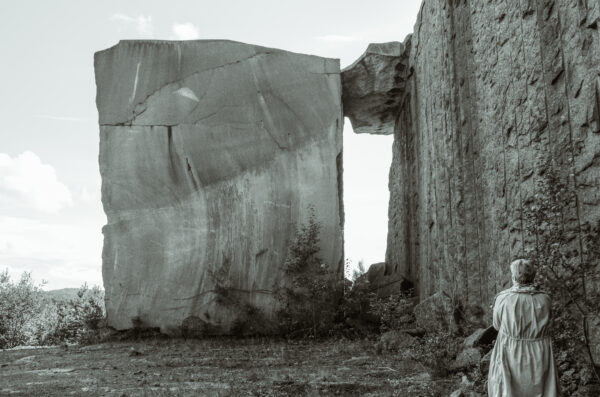
St. Peter’s Seminary, Cardross.

Le Corbusier never had one of his designs built in the UK, but the closest thing to a British Corbusian building might be St. Peter’s Seminary in Cardross, Schotland. The building was designed by the Gillespie Kidd & Coia office and completed in 1966. One of head architects, Isi Metzstein, died last month, something I only found out after visiting the site last week.

What you find when you go there - hidden on a hilltop just outside of Cardross, west of Glasgow - is amazing and horrific at the same time. The majestic piece of modernist architecture, featuring many imaginative elements, was practically obsolete by the time it was completed. The catholic institutions had witnessed decline, and by the end of the 1970s only some 20 students attended the college.After merely twenty years of use as a catholic college, seminary and monastery, the structure was abandoned in the early 1980s.

Read More

link
How buildings kill and get lost


In previous editions of Failed Architecture, it was often not without question whether a building or part of the built environment was failed. To whom is it failed and in what sense? Is it not possible to rejuvenate or reuse a piece of architecture? Many of the cases discussed were not failed per se but perhaps subject to certain shortcomings or unexpected outcomes – they deviously evolved from what their designers or planners had in mind.
               

This could not be said of the failures that were addressed during Failed Architecture’s sixth edition. Put forward were technologies, materials or designs – less ambiguous and susceptible to different interpretations – that turned out to have unforeseen negative implications for inhabitants, users, repairmen and janitors. Two speakers were invited to talk about this matter: professor Peter Luscuere and assistant professor Hielkje Zijlstra. Luscuere approached the topic from a mortal point of view and demonstrated how buildings could literally kill people. He discussed ten ways in which buildings can cause irritation, sickness or even death. In his presentation, he explored the numbers of non-natural mortal accidents in the Netherlands, of which around half is classified as ‘private accidents’. These private accidents represented to a large extent building-related mortality scenarios, according to Lucsuere. By addressing these ‘mortal mechanisms’, including fire and suffocation, explosions, overheating, electrocution and falling, but also poisoning (most common: CO-poisoning), infection (through ventilation systems), sickening (e.g. asbestos) and even depression (due to dysfunctional lighting, no view or bad acoustics), Luscuere demonstrated how faulty technologies or ill designs can negatively influence people’s wellbeing.
               

Hielkje Zijlstra’s lecture was titled ‘Lost in space’, by which she referred to buildings that were out of place in their urban environments because of an ill connection or a mismatch between the building and the public space. Installations and services meant to connect buildings and places, and guide their users, are more often than not obstacles to users and inhabitants instead of helpful devices. By using the TU Delft Campus as a case study to exemplify these mismatches, Zijlstra demonstrated how details of a place were not corresponding to their context and how the use and functioning of a place or a building were affected by non-effective or incomplete interventions. By showing incorrect or confusing signage, hidden passages, unfinished constructions and other faulty details on and around the TU Delft Campus, she concluded that the details were undurable and not fitting the context (or culture) of the place. In her final words, Zijlstra argued that architecture changes the condition of space and that architects, planners and city officials are jointly responsible for the inside and outside space of a building and the connection between the two. According to Luscuere, the same goes for buildings equipped with non-operating technologies; a better understanding and co-operation between the implementers of technology, designers and users will result in less ‘lethal’ buildings.

link
Failed Architecture #6: Concrete Failures

Talks and Q&A | Wednesday November 23 | English | 3,50 Euro

In the sixth edition of Failed Architecture, we will focus on the more concrete, technical and practical failures of architecture. Which seemingly clever building technologies or materials have turned out to have unforeseen negative implications for the inhabitants, users, repairmen and janitors? Which types of buildings are more often subject to failure or usage problems? When can we speak of just unforeseen complications and when are architects or contractors to blame? Which cases are exemplary and what lessons can be learned for future architecture?

- Peter Luscuere will give a lecture titled ‘How buildings kill’, in which ten mechanisms that lead to irritation, sickness or even death will be discussed. Peter Luscuere is professor in Building Technology at Delft University of Technology, guest professor at Tianjin University, China and former director of engineering consultancy Royal Haskoning.

- Hielkje Zijlstra will further zoom in on the night’s theme and elaborate on how buildings can get lost in urban space, hitherto resulting in a missing link between the former and the latter. Services and installations meant to make life in the built environment easier are more often than not obstacles for users and inhabitants instead of helpful devices. The TU Delft campus will serve as a case study in this lecture. Zijlstra is associate professor in Building Technology at Delft University of Technology. 

The evening will be hosted by Michiel van Iersel (De Verdieping). Tim Verlaan (UvA) and Mark Minkjan (independent researcher).


———————————————————————————————
This edition of Failed Architecture is part of a dual programme on concrete architectural failures. Next time we will focus on how inhabitants and users actually deal with their failed environments, exposing inventive ways of improving standardized apartment blocks and central service systems from a pan-European perspective.

Location: De Verdieping / TrouwAmsterdam | Facebook event

link
Participating in Sofia Architecture Week 2011

We have been invited by Ljubo Georgiev, co-curator of the Sofia Architecture Week 2011, to contribute to this year’s edition of this annual festival. It will take place between the 1st and the 6th of November and runs under the theme Architecture Unlimited?. SAW11 will deal with the extent, in which architecture can (still) function as a transformative tool for the urban environment in an age in which utopian ideals are replaced by city marketing, and making improvements in the cityscape is often subordinated to making profit.

Read More

link
Don’t blame the architect

Ever since the riots in Great Britain broke out in the first week of August, media and experts have been discussing the relation between architecture and social behaviour. During our fifth edition on the 5th of October we discussed this theme from historical, sociological and planning perspectives.

Obviously, social unrest tends to concentrate in urban environments. Rioting and the city have always been closely interlinked throughout history. In the first contribution to our fifth edition, historian Dennis Bos elaborated on the urban aspects of the 1871 Paris Commune. During this illustrious social disorder, a revolutionary self-elected government ruled the city for 72 days. Ending in utter defeat, it nevertheless was remembered and even sanctified by the international socialist, communist and anarchist movement as the first workers government in history.

Read More

link
Failed Architecture #5: riots and architecture

Talks and Q&A | Wednesday October 5 | starts 20.00h | English | 2,50 Euro

At De Verdieping with: Dennis Bos, Robert Grimm and Arnold Reijndorp

During the 5th edition of our series of talkshows and public discussions we will focus on the riots that recently took place in London and quickly spread to other cities in England, leaving several people killed, dozens of people injured and hundreds of buildings looted and burned. As Churchill famously intoned ‘We shape our buildings and then they shape us’. What is the relation between the material city and conflict? Have new urban forms produced new forms of violence? And what is the role of the architect and urban planner in this respect? Can they be blamed and/or can they provide a solution for this enduring problem?

Read More

link
30 SEP: Failed Architecture in Copenhagen

On the occasion of the national Day of Architecture on 30 September 2011 the Danish Network for Young Planners (Netværk for yngre planlæggere) invites Failed Architecture to Copenhagen. As the fourth in a series of similar events we will discuss criteria (‘benchmarks’) for quality and failure in modernist housing estates in an international East/West perspective.

Read More

link
Architecture experts talk about the UK riots

Rather inevitably, discussion among the architectural community this week has focused on the UK riots and the question of whether the cities we have been building have contributed to social breakdown. The opinions on the role of architecture differ widely. Here’s an overview of what some people had to say.

Read More

link
Detroit Wild City: reborn center or dying heart?

French filmmaker Florent Tillon’s 2010 documentary Detroit Wild City (Detroit ville sauvage) offers a poetic portrait of the dystopian ‘Motor City’ where ‘grass is growing in parking lots’ and building after building is crumbling apart. The film shows suffocating images of the Renaissance Center, one of the world’s largest office complexes and Ford’s failed attempt to revitalize the city center.

Luckily, the entire documentary is available (for free) on Mubi. We made a transcript and some film stills of the scenes dealing with the Renaissance Center, which is introduced by a nameless (?) expert who gives an instructive overview of the many architectural flaws that turned the complex of buildings into a fortress.

Read More

link
Architectural failure as a matter of politics

The third edition of our series of FA-discussions on Wednesday, June 15 at De Verdieping, a cultural project space located in an abandoned printing plant in Amsterdam, covered three different examples of fiercely debated architecture; buildings that were or are doomed to fail due to their location in the built environment, their time of conception and usability.

Maybe the most famous Dutch example of how opinion-forming on architecture works is the ‘Zwarte Madonna’, a former 350-appartmentblock in the inner city of The Hague. The building by architect Carel Weeber was heavily criticized during its life span (1985-2007). As several government departments in 2001 made a decision for the extension of their office blocks in the direct vicinity, the curtains fell for the black lady. However, public opinion altered after this decision. Some inhabitants resisted moving out, delaying the demolition process for almost six years. Attempts from their side to ‘pimp’ the building failed. According to one critic, painting the Zwarte Madonna would be equal to ‘putting lipstick on a gorilla’.


Read More

link
Failed Architecture #3: black architecture

Talks and Q&A | Wednesday June 15 | starts 20.00h | English | 2,50 Euro

With a.o.: Ana Souto, Paul Groenendijk & Maja Popovic

—————————————————————————————————————————————-

(Zwarte MadonnaPhoto taken from Presseurop)

Read More

link
Failed Architecture at Skopje Architecture Week

Failed Architecture will be co-hosting a public debate during the Skopje Architecture Week on Friday June 3. We were invited by Ljubo Georgiev, architect and speaker at the last Failed Architecture event in Amsterdam. In his role as curator of the coming Sofia Architecture Week in Bulgaria in November 2011, Ljubo was invited by the organization in Skopje to contribute to this annual event. Given the current debate on the legacy and future of Modernist architecture in the Macedonian capital, he proposed to organize a Failed Architecture event with the aim to re-energize the local discussion.

Read More

link
Neo-fascist Architecture in Amsterdam

During April 2011, members of the CITIES team listened to the story of five guests from five different cities for the second lecture and debate on the subject of Failed Architecture at De Verdieping in Amsterdam. During the debate, one fundamental question arose from the floor: how do we define ‘failure’? One suggested answer, that ‘failure is the opposition to durability’ proved puzzling – is it possible for a definition relating to a building or an urban structure to be more gender-related? And does it make sense to explore this issue further? This single sentence totally changed my approach towards the whole Failed Architecture debate, and made me think: why is this bunch of wannabe-experts (me included), trying to speculate upon the life and death of a building or a bunch of bricks?

Read More

link
More repentance wanted in assessing modernist architecture

Are we too quick in assessing post war architecture as failed? That was the question that dominated the second edition of the Failed Architecture series on the 20th of April at De Verdieping / TrouwAmsterdam.

At least a hundred people listened to how five speakers gave their views on how our contemporary taste influences the assessment of modernist architecture. The diverse backgrounds of the guests resulted in a comprehensive worldwide oversight.

Read More

link
Failed Architecture #2: Almere to Zagreb


Detroit. Photo by Spencer Platt/Getty Images

Read More